The First 24–48 Hours After a Fire Are Critical
A fire leaves you with two emergencies, not one. The obvious one is what burned. The quieter one is what the smoke coated and what the fire hoses soaked — and if you only handle the first, the second becomes a mold loss and a permanent odor problem on top of everything else.
The chemistry starts working immediately. Soot dissolves into leftover suppression water and turns acidic, etching tile, tarnishing chrome and brass, and pitting aluminum within hours. Meanwhile, saturated framing, insulation, and drywall create ideal conditions for mold, which in Austin's humid climate can take hold in 24 to 48 hours.
That clock is why we answer the phone around the clock. Call (737) 309-5075 and you reach someone who walks you through what to do before the crew arrives — what to touch, what to leave, who to call first. Then we mobilize, stabilize the property, and begin the documented process that becomes your insurance file.
We handle fire and smoke damage restoration across the Austin metro, including Round Rock, Georgetown, Buda, Kyle, San Marcos, Dripping Springs, Lakeway, Bee Cave, and the surrounding communities.
Emergency Fire Damage Services
Before any cleaning begins, the property has to be secured against further damage and made safe to work in. These are the first tasks on every fire loss we handle.
Board-Up & Roof Tarping
Blown-out windows, warped doors, and roof sections opened by fire or hoses leave your property exposed to weather and trespassers. We board and tarp the same day — usually the same visit — because every hour of exposure adds to the scope.
Utility Isolation
Electric, gas, and water stay off until licensed trades clear them. A live circuit in a water-soaked structure is a genuine hazard, and any gas line disturbed by the fire must be evaluated before service is restored.
Suppression Water Extraction
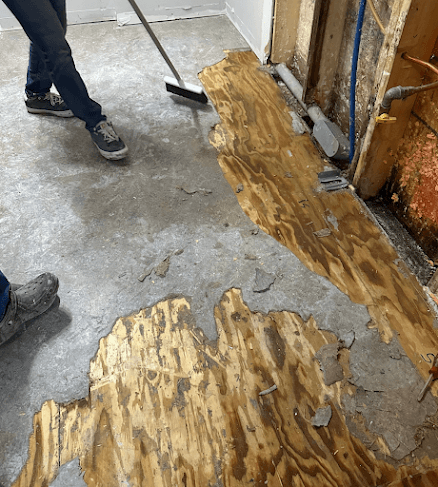
The water that put the fire out is now your second problem. We extract it immediately and dry the structure to metered standard — because soot cleaned into damp drywall drives residue deeper and sets it permanently.
Hazardous Material Screening
Older homes get screened for asbestos and lead paint before any demolition starts. Disturbing either without proper protocols turns a manageable loss into a regulated abatement project — we check first rather than discover it mid-job.
Damage Documentation
Every affected surface photographed, every moisture reading logged, and a written scope of what burned, what the smoke reached, and what the water saturated. Your adjuster works from this file, so we build it from the first visit.
Site Security
A fire-damaged property with open entries is a target. We secure the structure and can coordinate temporary fencing on larger losses. Emergency stabilization costs are typically claimable — we document them so they land in your claim.
Our Fire Damage Restoration Process
This is the sequence every fire loss follows, from the first call to the final permitted inspection. Insurance documentation is built at each step, not assembled at the end.
Fire Department Clearance & First Call
No contractor should enter until the fire department releases the structure. Request the incident report — your insurer will need it. Then call us at (737) 309-5075, any hour.
Emergency Stabilization
Board-up, roof tarping, utility isolation, and site security, completed on the first visit. We document everything before touching anything, because that record is the foundation of your claim.
Water Extraction & Structural Drying
Suppression water comes out first, then air movers and dehumidifiers run until meters confirm the structure is dry — typically three to five days. Smoke cleaning on a wet substrate does not hold, so this comes before cleaning.
Damage Assessment & Written Scope
Systematic documentation to the industry standard for fire and smoke restoration. We identify the residue type on each surface, inventory contents, and put the demolition, cleaning, and rebuild scope in writing before work begins.
Demolition & Contents Pack-Out
Unsalvageable materials — charred framing, burned insulation, compromised drywall — are removed and documented. Salvageable belongings are photographed, inventoried, and moved to a climate-controlled facility for specialized cleaning and storage, with chain-of-custody records throughout.
Soot Cleaning, HVAC & Deodorization
HEPA vacuuming top to bottom, then cleaning chemistry matched to the residue type on each surface. Every duct, coil, and register is cleaned before the system restarts, followed by structural deodorization that neutralizes odor compounds rather than masking them.
Permitted Rebuild & Final Walkthrough
Austin issues expedited permits for same-footprint fire repairs, and we coordinate every permit and licensed trade through final inspection. Your contents come home, we walk the property with you, and you receive the complete project file for your insurer.
The 4 Types of Soot — and Why the Cleaning Method Matters
Soot is not one substance, and using the wrong method makes it permanent. What ended up on your walls depends on what burned, how hot, and how much oxygen was available — and each type needs different chemistry.
Dry smoke comes from fast, hot fires like paper and wood. The residue is powdery and lifts cleanly with dry chemical sponges — but wipe it with a wet cloth and you set it into the surface permanently.
Wet smoke comes from slow, smoldering fires involving plastics and synthetics, which makes it the most common residue in modern homes. It is sticky, dense, strongly odorous, and smears easily, so it requires dry cleaning first, then alkaline cleaners — never the reverse.
Protein residue from kitchen fires is nearly invisible and badly underestimated for exactly that reason. The film is almost clear but intensely odorous, bonds to cabinets and painted surfaces, and ignores ordinary cleaners — it takes enzymatic agents applied to every surface, including inside appliances.
Fuel oil soot from furnace malfunctions is dark, oily, and needs solvent-based cleaning. It also spreads aggressively through HVAC systems that were running during the event.
Most house fires leave more than one residue type, which is why we identify the dominant type surface by surface instead of applying a single protocol to the whole house. A contractor who cleans everything the same way is guessing.
Smoke Odor Removal: Why Painting Over It Never Works
It is the most understandable shortcut in restoration: the walls look clean after washing, so someone primes and paints. Three weeks later the smell is back through the fresh paint.
Smoke odor compounds penetrate porous materials at a molecular level — into drywall, framing, insulation, and fabric. Sealing the surface traps them temporarily, but they keep off-gassing through most paint, and Austin's constant humidity swings speed that up.
Real deodorization works at the same depth the smoke did. Thermal fogging sends a fine mist into the cavities and materials that absorbed the odor and neutralizes those compounds. Hydroxyl generators oxidize airborne VOCs and are safe to run while the space is occupied. Ozone is more aggressive and requires the building to be empty. Encapsulant primers seal whatever remains bound in structural surfaces before finishes go back on.
The HVAC system is the step most often skipped, and it is why odor returns in homes declared restored. Your return ducts pulled smoke through the entire system during the fire and coated the coils, plenum, and every supply run. Restart it before cleaning and it re-contaminates rooms the fire never touched — so we confirm the system is off on arrival and it stays off until ducts, air handler, coils, and registers are cleaned and filters replaced.
Which combination your home needs depends on how deep the odor penetrated. A contained kitchen fire may need enzymatic cleaning and localized fogging; a fire that traveled the whole HVAC system may need all of it in sequence.
Contents Pack-Out: What Can Actually Be Saved
The question we hear most urgently after a fire is what can be salvaged. The honest answer: more than you think if it is handled quickly, and less than you hope if it sits in a smoke-filled structure for weeks.
Clothing and soft goods are the most common avoidable loss. Washing smoke-damaged fabric at home permanently sets the odor — heat and agitation drive the compounds deeper into the fibers. Professional textile cleaning using ultrasonic or ozone-chamber methods usually costs far less than replacement.
Electronics are often recoverable too. Soot is conductive and will eventually short a circuit board, but a device cleaned and corrosion-treated within a reasonable window frequently works perfectly. Documents and photographs follow their own protocols, including freeze-drying for water-damaged items.
We inventory everything and give you an honest assessment before decisions are made — including when something is not worth saving. Contents also cannot stay in a home being treated with fogging and chemical agents, and a climate-controlled facility simply produces better results than a job site.
Austin Wildfire Risk and What It Means for Your Rebuild
Austin ranks among the top five major U.S. cities for homes at elevated wildfire risk, with tens of thousands of Austin-area homes in elevated wildfire risk zones. We do not get California's extreme wind events, but summer drought, heat, and dense Hill Country cedar and oak fuel fast-moving grass and brush fires.
Austin was the first major Texas city to adopt a Wildland-Urban Interface code, setting requirements for exterior walls, roof coverings, and vegetation management inside a mapped interface zone. If your home sits in that zone and the damage requires a substantial rebuild, those requirements apply to your reconstruction — so we check your address against current WUI maps before scoping any rebuild on the west and northwest sides of the metro.
There is one coverage gap worth knowing about now rather than at claim time. When fire damage exceeds roughly half your structure's pre-loss value, the rebuild must meet current building codes — not the codes your home was built under. Ordinance or Law coverage is the endorsement that pays for that upgrade cost, and it is not always included in a standard policy. Without it, the difference comes out of pocket.
Your Insurance Rights After a House Fire in Texas
Fire is a covered peril under standard Texas homeowners policies. Your dwelling, your personal property, and your additional living expenses while displaced are each covered under separate parts of the policy — and you are never required to use a contractor your insurer recommends. Getting your own estimate is your right.
Texas law also puts your insurer on a clock. Under the state's prompt-payment rules, carriers must acknowledge your claim within 15 days, accept or deny it within 15 business days of receiving the documentation they requested, and pay within 5 business days of accepting. Miss those deadlines and they owe you interest plus attorney fees.
Two deadlines run against you, though. Most Texas policies require written proof of loss within 91 days of the fire, and the window to sue over a wrongly denied claim is two years. Notify your carrier the day of the fire if you can, in writing.
Texas also regulates the contract you sign. Disaster remediation contractors cannot demand full payment before work begins, and payments must stay reasonably proportionate to the work actually performed.
We will walk you through what to expect from your carrier before you sign anything and before the claim is filed. Coverage decisions are your carrier's to make, but going in informed is how you avoid surprises.
6 Red Flags When Hiring a Fire Damage Contractor
A house fire draws contractors fast — some from out of state, with no local presence and contracts built to exploit the urgency of the moment. These are the signals worth walking away from.
They Demand Large Money Up Front
Texas law prohibits disaster remediation contractors from requiring full payment before work begins. A contractor demanding substantial money up front is violating state law, and the contract itself may be unenforceable. Do not sign it.
They Offer to Waive Your Deductible
It is a criminal offense in Texas for a contractor to offer to waive, absorb, or rebate your deductible — and the offer usually means the estimate was inflated to cover it. Your insurer can also withhold part of your payment until the deductible is verified as paid.
No Written Scope Before Work Starts
A real restoration contractor hands you a written scope before mobilizing. Anyone who wants to start right away and sort out details later is someone who will dispute those details later, to your disadvantage.
No Verifiable Local Presence
Ask for an Austin-area address and references from jobs finished more than a year ago. A company that plans to still be here when your rebuild wraps can answer both without hesitating.
No Certificate of Insurance
Ask for general liability and workers' compensation certificates before any crew sets foot on your property. Serious fire restoration firms also carry pollution endorsements, since soot and cleaning chemistry fall outside basic liability coverage.
Pressure to Sign Over Your Claim
Signing an assignment of benefits before the scope is known strips your ability to negotiate, dispute, or change contractors. Legitimate companies do not need your claim rights — only authorization to work and a clear scope.
Fire Damage Restoration FAQs
The questions we hear most in the first 48 hours after a fire — answered directly.
What should I do immediately after a house fire?
Stay out until the fire department releases the structure. Once it does, photograph and video everything before anything is moved or cleaned, then call your insurer to open the claim and a restoration contractor to stabilize the property. Request the fire incident report — your carrier will need it. If you have a mortgage, notify your lender too, since they often must sign off on the settlement check.
Is it safe to go back inside after a fire?
Not until the fire department clears the structure, and even then only briefly. Fire weakens load-bearing elements in ways you cannot always see, and soot contains fine particulates and volatile compounds that are harmful to breathe — especially for children, older adults, and anyone with asthma. Short trips for essentials with an N95 are usually manageable; living in an unmitigated fire-damaged home is not.
Does homeowners insurance cover fire damage?
Generally yes — fire is a covered peril on standard Texas policies, including your structure, your belongings, and living expenses while displaced. The detail that catches people out is Ordinance or Law coverage, which pays for code upgrades when a badly damaged home must be rebuilt to current standards. Without that endorsement, those upgrade costs come out of pocket. Check for it before the scope is set.
How do I get the smoke smell out of my house?
Not by airing it out, painting over it, or spraying anything from a hardware store. Odor compounds penetrate drywall, framing, insulation, and fabric at a molecular level and keep off-gassing through paint. Lasting removal means taking out what cannot be cleaned, then treating the structure with thermal fogging, hydroxyl, or ozone — and cleaning the HVAC system before it ever runs again.
How long does fire damage restoration take?
A contained kitchen fire with no structural damage often takes one to two weeks. A fire across multiple rooms with structural damage and heavy suppression water is a longer road: days to stabilize, three to five days to dry, a week or more for cleaning and deodorization, then six to twelve weeks of reconstruction depending on scope and permits. You get a realistic timeline up front, including the parts nobody enjoys hearing.
How much does fire damage restoration cost in Austin?
Cost depends on residue type and how far the smoke traveled — wet soot from synthetics costs more than dry soot because the chemistry is slower and more intensive. Reconstruction depends entirely on what has to come out and what code requires going back in. Every estimate we write is itemized so you can see exactly what drives it.
What is the difference between fire restoration and reconstruction?
Restoration is everything that brings the structure and contents back without rebuilding: stabilization, water extraction, drying, soot cleaning, deodorization, and contents care. Reconstruction is the permitted rebuild — framing, drywall, electrical, plumbing, HVAC, finishes. Most fires need both, and most companies do only the first. We do both, so nothing is lost in a handoff.
Do I need a permit to rebuild after a fire in Austin?
Yes, for structural repairs. Austin offers an expedited permit for rebuilds keeping the same footprint and floor plan, typically issued in about one business day. You will need the fire incident report, and where structure is compromised, an engineer's verification. Electrical, plumbing, mechanical, and gas work each require separate permits and licensed trades. We coordinate all of it.
Can smoke damage make a house uninhabitable?
Yes. Smoke residue off-gasses volatile compounds for weeks or months, and a home with significant soot contamination and active odor is not a safe long-term environment — particularly for children, older adults, and people with respiratory conditions. Your policy's additional living expenses coverage typically pays for temporary housing during a covered loss, and we document the conditions supporting that claim.
What certifications should a fire restoration company have?
Look for technicians with formal fire and smoke restoration training, plus water damage restoration training, since nearly every fire involves suppression water. Ask whether the whole crew is trained, not just one lead technician. Beyond credentials, ask for proof of general liability and workers' compensation before any crew enters, and a written scope before work begins.
Fire Damage in Austin? Call Now
Soot keeps corroding and suppression water keeps soaking for as long as the property sits. The first 48 hours decide how much of your home and belongings can be saved.
Call CDG Restoration & Construction at (737) 309-5075 — we answer around the clock, walk you through the immediate steps on the phone, and get a crew moving to your property. Written estimates are free, and we work with your insurance carrier from the first visit through the final inspection.
Call Now