
A Leak Today Is a Ceiling Tomorrow
Most roofing companies stop at the roof. They patch the shingle, hand you an invoice, and the stained ceiling, soaked insulation, and damp wall cavity below become somebody else's problem — usually yours, and usually a second contractor.
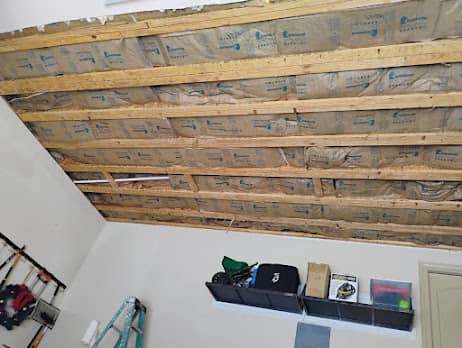
That is backwards, because by the time a leak shows up indoors the water has been in your structure a while. Wet insulation stops insulating, saturated decking loses strength, and a few weeks of Central Texas humidity turns a roofing problem into a mold problem.
One more thing worth knowing: water almost never enters directly above the stain on your ceiling. It comes in at a penetration or transition, runs along the decking or a rafter, and drops somewhere else entirely. Chasing the stain instead of the path is why so many leaks get repaired twice.
CDG is a roofing contractor and a restoration contractor. We find the actual entry point, repair it, dry the structure, and rebuild the ceiling and paint — one company, one estimate. We answer 24/7 when water is actively coming in, and we serve Austin, Round Rock, Georgetown, Buda, Kyle, San Marcos, Dripping Springs, Lakeway, Bee Cave, and the surrounding communities.
Roof Problems We Repair Across the Austin Metro
Roofs rarely fail across the whole surface at once. They fail at the details — the penetrations, the transitions, the edges — and at whatever the last storm found.
Hail Bruising & Impact Damage
Hail knocks granules loose and bruises the mat underneath, which does not always leak straight away but shortens the roof's life dramatically. It is also the damage homeowners most often miss from the ground, and the kind adjusters look hardest at.
Wind-Lifted & Missing Shingles
Central Texas straight-line winds break the sealant strip and lift tabs even when nothing blows off. Once the seal is broken, the next storm drives rain underneath the course above.
Flashing & Valley Leaks
Chimneys, wall transitions, skylights and valleys concentrate water. Most leaks we chase are a flashing detail that was never right, not a failed field of shingles.
Pipe Boot & Collar Failure
The rubber collar around a plumbing vent is the single most common leak source on an Austin roof. Texas UV destroys them in roughly eight to twelve years — well before the shingles are done.
Ridge Cap & Ventilation Damage
Ridge caps and vents take the highest wind loading on the roof. Damaged ridge vents also let water in at the exact point where the attic is hardest to inspect.
Interior Water Damage
The stained ceiling, wet insulation, and damp wall cavity a leak leaves behind. Most roofers hand this off. We extract, dry to verified readings, and rebuild the drywall and paint on the same estimate.
Learn moreWhat Does Roof Repair Cost in Austin?
Most Austin roof repairs land between roughly $300 and $1,600, with the metro average sitting near $800. Here is how that breaks down by severity so you can size the job before anyone comes out.
Minor repairs — a failed pipe boot collar, a small flashing detail, sealant work, a handful of replaced shingles — typically run $300 to $800. This is the majority of leak calls we take, and it is often a same-visit fix.
Moderate repairs — a damaged section of field shingles, valley rework, or several problem areas across a slope — generally run $1,100 to $1,600. Expect roughly $3.50 to $12 per square foot depending on material, with asphalt at the low end.
Major repairs — structural decking replacement, extensive storm damage, or significant interior water damage — can reach $8,000 or more, and at that point the repair-versus-replace math deserves a serious look.
One honest warning: if decking underneath turns out to be soft or delaminated, that adds cost no one can see from the ground — commonly $500 to $2,000. We check the deck before quoting where we can, and any allowance is written into your estimate up front rather than added at the end.
Repair or Replace? An Honest Answer
Three things decide it: how old the roof is, how much of it is damaged, and whether the damage sits in the details or spreads across the field.
Age matters most. Architectural shingles are rated 25 to 30 years, but that assumes a milder climate. Between relentless UV, sustained summer heat, and repeated hail, 15 to 20 years is realistic in Central Texas — and an under-ventilated attic running past 150°F cooks them from underneath, shortening it further. A wind-damaged slope at year eight is worth repairing. The same damage at year nineteen usually is not.
There is also a code provision roofers call the 25% rule: if more than a quarter of a single slope is repaired or replaced within twelve months, that slope generally has to come up to current code rather than be patched. How it is measured varies with how the city applies the adopted code — it can be assessed section by section, so damage concentrated on one slope may still trigger it. We confirm how it applies at your address before scoping anything.
Where a repair genuinely solves it, we say so — it is the smaller job, and we would rather have the referral. Where a repair is just a deferred replacement, we say that too, in writing, so you can weigh it yourself.
4 Ways to Spot a Storm Chaser
Texas issues no state roofing license, so vetting falls to you. After every hail event, out-of-town crews start knocking. These are the signals worth trusting.
They Offer to Cover Your Deductible
It is a crime in Texas, not a discount, and a reliable sign the estimate was padded to absorb it. Your carrier can also withhold depreciation until it confirms you actually paid — so the favor can cost you the back half of your claim.
They Knocked Two Days After the Storm
Door-to-door canvassing right after hail is the storm-chaser business model. They follow weather, not warranties, and they will not be here when yours needs honoring.
They Want a Signature Today
Especially an assignment of benefits before the adjuster has seen the roof. Signing your claim rights over under pressure is how homeowners lose control of their own repair.
No Local Address, Insurance, or Line Items
Ask for an Austin-area office, references from jobs finished a year ago, and a certificate of liability and workers' comp. A lump-sum estimate with no line items cannot be checked against your carrier's scope — which is the point of writing it that way.
How a Roof Repair Runs, Start to Finish
The same sequence whether it is a single pipe boot or a full slope with a claim behind it.
Call & Free Inspection
Call (737) 309-5075. If water is actively coming in, we talk you through protecting what is below and get out to tarp it. Otherwise we schedule the inspection and put the findings in writing.
Diagnosis, Not Guesswork
Slope-by-slope surface inspection, attic inspection from underneath, and moisture readings on any affected ceiling or wall. The attic shows what the surface will not — daylight at penetrations, stained decking, wet insulation, and whether ventilation is cooking your shingles from below.
Scope, Estimate & Claim Decision
A line-item scope you can actually read. If it looks like a claim, we document hail strikes and wind damage the way an adjuster expects — test squares, close-ups, slope by slope — and meet them on the roof. If it is not worth filing, we say so.
The Repair
Damaged materials removed, decking checked for soft or delaminated sheathing before anything goes back on, underlayment and flashing detailed correctly, and shingles matched as closely as existing weathering allows.
Interior Repairs & Walkthrough
Wet insulation out, cavity dried to a verified reading, then ceiling, drywall, texture, and paint rebuilt by the same company. We walk it with you and clean down to a magnet sweep for nails.
Roof Repair FAQs
Straight answers to what Austin homeowners ask when a roof starts leaking.
How much does roof repair cost in Austin?
Most repairs run $300 to $1,600, averaging around $800. A failed pipe boot or small flashing fix is typically $300 to $800; a damaged section or valley rework runs $1,100 to $1,600; major structural or storm damage can reach $8,000 or more. Soft decking discovered under the shingles commonly adds $500 to $2,000. We inspect free and put a line-item estimate in writing first.
How do I find where my roof is leaking?
Not by looking directly above the stain — water enters at a penetration or transition, travels along decking or a rafter, and drops somewhere else. Finding it takes a slope-by-slope surface inspection, an attic inspection from underneath, and moisture readings on the affected ceiling. Chasing the stain instead of the path is why leaks get repaired twice.
Should I repair or replace my roof?
Age decides most of it. Architectural shingles rated 25 to 30 years realistically last 15 to 20 in Austin heat, so a damaged slope at year eight is worth repairing while the same damage at year nineteen usually is not. Watch the 25% rule too: repairing more than a quarter of a roof section within twelve months can trigger a full code-compliant rebuild of that section — we confirm how the city applies it at your address before scoping anything.
Does homeowners insurance cover roof repair in Texas?
Usually yes for sudden covered perils like hail or windstorm, and usually no for age, wear, or deferred maintenance. Two policy details decide your payout: whether you carry replacement cost or actual cash value, since ACV depreciates an older roof substantially, and your wind and hail deductible, which is often a percentage of dwelling coverage rather than a flat figure. We will tell you before you file whether a claim is worth making.
What is the deadline to file a hail damage claim in Texas?
Texas generally allows two years from the date of loss for a property damage claim, and most policies separately require prompt notice. Damage from past storm seasons is still routinely found on uninspected Austin roofs, which is why getting a look now beats waiting until the next storm muddies which event caused what.
Can a roofing company waive my deductible in Texas?
No, and treat the offer as a warning. Texas law requires you to pay your deductible, and it is a criminal offense for a contractor to pay, waive, absorb, or rebate it. Your insurer can also withhold recoverable depreciation until it sees proof you paid — so accepting a waiver can cost you the second half of your claim.
Do you repair the damage inside, or just the roof?
Both, and it is the main reason to use us rather than a roofing-only company. Once the roof is watertight we remove wet insulation, dry the ceiling and wall cavities to verified readings rather than assuming, and rebuild the drywall, texture, trim, and paint. One company, one estimate, nobody to blame if the finish does not match.
Water Coming Through the Ceiling?
Call CDG Restoration & Construction at (737) 309-5075. We will talk you through protecting what is underneath and get a crew out to stop the intrusion.
Inspections and written estimates are free, we handle the insurance claim, and we repair the damage inside — not just the hole it came through.
Call Now