Water Damage Restoration in Kyle: What Makes It Local
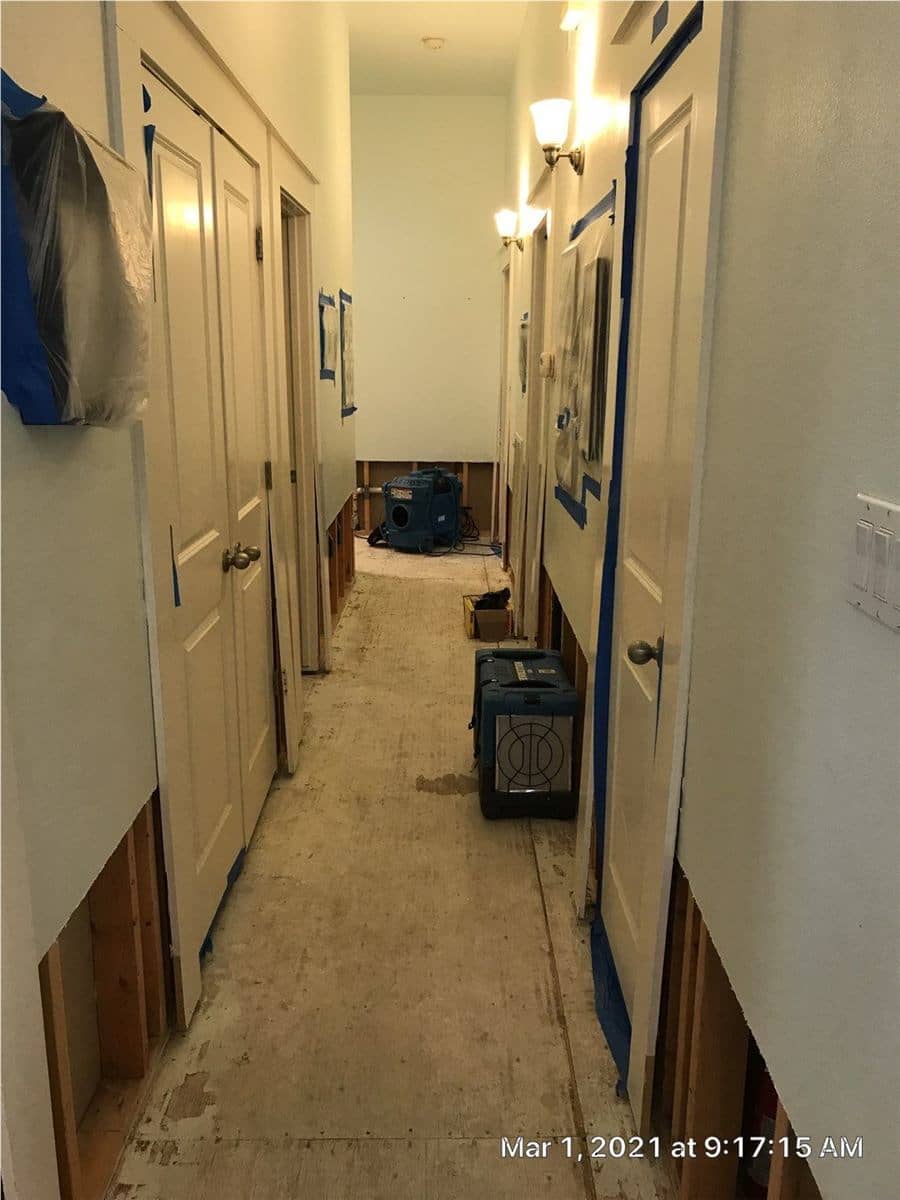
Kyle's expansive Blackland clay soils shrink and swell dramatically with seasonal moisture changes, stressing post-tension slab foundations and the supply and drain lines embedded within them; slow slab leaks can saturate subfloor material for weeks before surfacing. Flash flooding is a recurring risk along both the Blanco River corridor and Plum Creek, which drains a large catchment and can rise rapidly during Central Texas storm events. Winter Storm Uri (February 2021) caused widespread pipe bursts across Hays County, triggered a boil-water notice in Kyle, and left many residents without service for several days as frozen pipes in attics and exterior walls failed when temperatures thawed.
Kyle sits at roughly 728 feet elevation on a transitional landscape between the Balcones Escarpment and the Blackland Prairie. The Blanco River flows through the western side of the city and the Plum Creek drainage runs through the central and eastern portions, both ultimately feeding into the San Marcos River. Soils are divided: western areas near the Blanco River corridor contain caliche and limestone typical of the Hill Country, while the central and eastern portions sit on expansive Blackland Prairie clay (Houston Black Vertisols) with plasticity indices commonly exceeding 50 and seasonal shrink-swell movement of 3 to 6 inches. Properties near Plum Creek and the Blanco River have FEMA-designated Special Flood Hazard Areas, and updated flood maps released in 2025 expanded floodway boundaries along the Blanco River east of I-35.
Neighborhoods We Cover in Kyle
We work throughout Kyle, including Plum Creek, 6 Creeks, Bunton Creek, Waterleaf, Kensington Trails, Blanco Vista, Crosswinds and Anthem — and the surrounding 78640 area.
Our Buda crews cover Kyle routinely — a few minutes down I-35. On an emergency call that distance is the whole difference between a crew arriving with drying equipment and an answering service logging your address for the morning.
How Kyle Homes Are Built — and How They Fail
Kyle's housing stock is predominantly newer construction, with a median year built of approximately 2010. About 37% of homes were built from 2000 to 2009 and another 39% between 2010 and 2019, with ongoing new construction in communities such as 6 Creeks, Anthem, and Crosswinds. Nearly all production-built homes sit on post-tension concrete slabs; pier-and-beam construction is rare and mostly limited to the handful of pre-1970s homes in the historic downtown core. Builder-grade composition architectural shingles dominate roofing across Plum Creek, Waterleaf, Bunton Creek, and Kensington Trails, with standing-seam metal and Class 4 impact-resistant shingles increasingly installed as storm replacements. Plumbing in homes built after 2000 is typically PEX supply lines and PVC drains, though some early 2000s construction used CPVC; Kyle's hard water accelerates joint wear in all materials.
Severe Weather Kyle Has Actually Seen
These are the events that drive the calls we take in Kyle. If your property was in the path of any of them, damage from that storm may still be unresolved — and in some cases still claimable.
October 1998
Major Central Texas flooding; Hays County received widespread 20–30 inches of rain over 36 hours, exceeding the 100-year flood plain and causing severe damage across the county including the greater Kyle/San Marcos area
May 23–24, 2015
Memorial Day Blanco River flood; catastrophic flash flooding in Hays County with 1,515 structures impacted, 321 homes destroyed, and estimated $100 million in insured losses; the Blanco River corridor through western Kyle was directly affected
February 11–20, 2021
Winter Storm Uri; statewide grid failure brought extended sub-freezing temperatures to Hays County, causing widespread pipe bursts in Kyle homes, boil-water notices for Kyle/Buda/San Marcos, and disaster declarations across Hays County
September 24, 2023
Large hail storm producing baseball- to softball-sized hail across the Austin metro region; approximately $600 million in regional insured losses; older shingle roofs in Kyle subdivisions sustained significant damage
May 9, 2024
Hail up to 3.25 inches recorded along the I-35 corridor through Kyle
Other Services We Provide in Kyle
Restoration and construction under one roof. The crew that mitigates the damage is the crew that rebuilds it, so nothing falls through the gap between two contractors.
Fire Damage Restoration in Kyle
Fire Damage Restoration for Kyle homes and businesses, handled by the same local team.
Learn moreMold Remediation in Kyle
Kyle's combination of high Central Texas humidity, rapid production-build construction cycles, and expansive clay soil creates compounding mold risk: moisture trapped by improperly flashed windows, bathroom fans venting into attics instead of through the roof, and inadequately waterproofed roof-to-wall transitions are common defects in 2000s and 2010s subdivisions.
Learn moreRoof Repair in Kyle
Composition architectural shingles are the dominant roof material across virtually all Kyle production subdivisions built since 2000; roofs on 2005–2010 builds are now 15 to 22 years old and showing significant granule depletion after repeated hail seasons.
Learn moreRoof Replacement in Kyle
Full replacement scoped, priced line by line, and built by the same local team.
Learn moreAll Services in Kyle
Everything we cover in Kyle, from emergency mitigation through full reconstruction.
Learn moreNeed Water Damage Restoration in Kyle Right Now?
Call and we will walk you through the first steps while a crew heads your way. Estimates are free and we work directly with your insurance carrier.
Call Now