Mold Removal vs. Mold Remediation — Why the Difference Matters
Wiping mold off a bathroom wall is removal. It takes ten minutes, and if the wall behind it is still damp, the mold is back within two weeks. That is the most common reason Austin homeowners call us — not because nobody cleaned the mold, but because somebody cleaned it and never touched the reason it was there.
Mold remediation is the whole job: find the water, fix the water, contain the area so spores do not spread, remove what cannot be salvaged, clean and treat what can, verify the result with testing, and put the room back together.
That last step is where most mold companies stop and hand you a list of contractors. CDG is a restoration and construction company in one — the leak gets repaired, the mold gets remediated, and the drywall, texture, paint, trim, and flooring get rebuilt by the same team. You are never left with a sealed-off room and nobody to finish it.
We provide mold remediation and mold removal across the Austin metro — Round Rock, Georgetown, Buda, Kyle, San Marcos, Dripping Springs, Lakeway, Bee Cave, and the surrounding communities. Inspections are free: (737) 309-5075.
6 Signs of Mold in Your Home
Mold is usually found by nose or by symptom long before anyone sees it. If any of these sound like your home, a free inspection is worth the hour it takes.
A Musty Smell That Will Not Leave
That damp, earthy odor in a closet, bathroom, or laundry room is microbial growth giving itself away. If the smell gets stronger when the AC kicks on, the problem may be in your ductwork or air handler.
Visible Growth or Staining
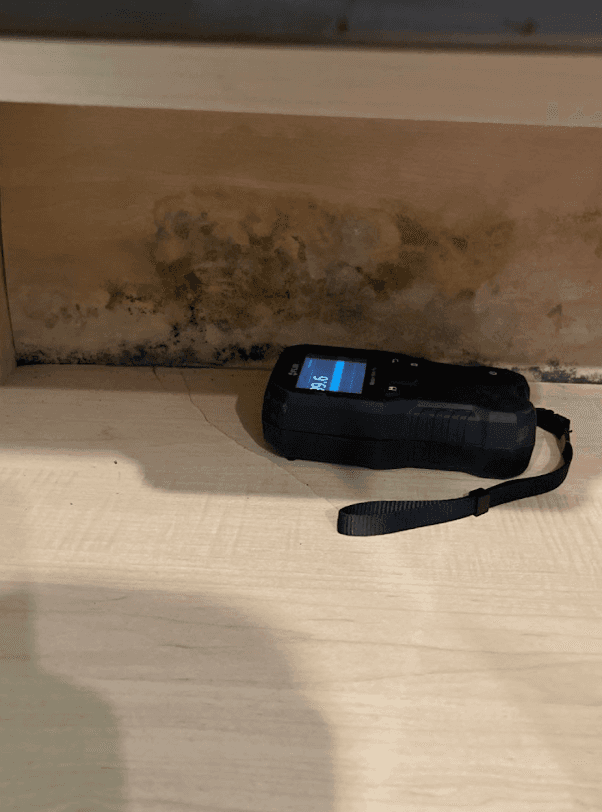
Black, green, gray, or white patches on drywall, grout, ceilings, or baseboards. Discoloration that returns after cleaning means moisture is still feeding it from behind the surface.
Symptoms That Ease When You Leave
Congestion, coughing, headaches, or itchy eyes that improve at work and return at home. That pattern points at the building rather than the season.
A Water Leak in the Past
A burst pipe, roof leak, overflowed tub, or slab leak — anything that stayed wet longer than about 48 hours. Mold does not need a flood, only time and moisture.
Warping, Bubbling, or Peeling
Paint that bubbles, wallpaper that lifts, baseboards that swell, or floors that cup. Materials deform when they hold moisture — and where materials hold moisture, mold follows.
Condensation and High Humidity
Sweating windows, damp closets, or a room that never quite feels dry. Sustained indoor humidity above roughly 60% grows mold without any leak at all — a real risk in Central Texas.
Mold Remediation Services We Provide
Mold behaves differently depending on where it grows and what fed it. These are the jobs we handle most often in Central Texas homes and businesses.
Mold After Water Damage
The most common source by far — a pipe, appliance, or roof leak that sat too long, or a dry-out called finished before the structure actually reached dry standard. We handle both halves of that problem.
Learn moreBlack Mold Removal
Stachybotrys and the other dark species get the headlines, but the response is identical regardless of species: contain it, remove it, fix the moisture, verify the result. Color changes the anxiety, not the protocol.
Bathroom, Shower & Tile Mold
Failed grout, cracked pan liners, and missing waterproofing put water behind tile where nobody sees it. We open it, remediate it, and rebuild the shower properly so it does not happen again.
Attic & Crawlspace Mold
Roof leaks, blocked soffit vents, and bath fans dumping humid air into the attic instead of outside. Poor ventilation grows mold across roof sheathing quietly for years before anyone notices.
HVAC & Air Duct Mold
When growth reaches the air handler or ductwork, your system distributes spores to every room it serves. A musty smell that arrives with the AC needs looking at, not masking.
Commercial Mold Remediation
Offices, retail spaces, and rental properties, scheduled around business hours where possible. Containment keeps the unaffected part of the building open and working while we remediate.
Our Mold Remediation Process
This is the sequence a licensed-size project follows in Texas — and the documentation we build along the way is the same file your insurance adjuster receives.
Call & Free Inspection
Call (737) 309-5075 and we come look. We identify the growth, trace the moisture feeding it with meters instead of guesswork, and tell you whether this is a small contained repair or a licensed-size project.
Assessment & Protocol
On projects of 25 contiguous square feet or more, an independent licensed mold assessment consultant tests the property and writes the remediation protocol — the document defining exactly what must be removed, cleaned, and verified.
Containment & Negative Air
Sealed barriers isolate the work area and HEPA-filtered negative air machines hold it at lower pressure than the rest of your home, so spores disturbed during removal go into a filter instead of your bedrooms.
Removal & HEPA Cleaning
Porous materials that cannot be saved — drywall, insulation, carpet pad — are cut out and bagged inside containment. Salvageable surfaces are HEPA-vacuumed, wiped, and treated with an antimicrobial.
Fix the Moisture Source
The plumbing leak, the roof penetration, the failed shower pan, the ventilation problem. Remediation without this step buys you a few months at best — and we will not sign off on it.
Clearance Testing
The independent consultant re-tests before containment comes down. Passing clearance is what turns 'it looks clean' into documented proof — and on licensed-size projects, it produces your Certificate of Mold Damage Remediation.
Rebuild & Walkthrough
The same company puts the room back together: drywall, texture matched to the existing wall, paint, trim, cabinets, and flooring. We finish with a walkthrough and keep working until you are satisfied.
Texas Mold Law: What the 25-Square-Foot Rule Means for You
Texas regulates mold work more tightly than most states, and knowing which side of the line your job falls on saves you money and trouble. The Texas Department of Licensing and Regulation draws that line at 25 contiguous square feet of affected area.
Below 25 square feet, no licensed mold contractor and no state notification are required. A patch of bathroom ceiling or the back of one vanity is a contained repair — treating it like a full containment project mostly inflates the invoice.
At or above 25 square feet, the rules change: the work must be performed by a TDLR-licensed mold remediation contractor, the state must be notified at least five days before work begins, and the area requires physical containment with HEPA-filtered negative air.
Texas also keeps assessment and remediation deliberately separate. The licensed consultant who inspects your property, writes the protocol, and issues the final clearance is independent of the contractor doing the work — nobody grades their own homework. If a company offers to both test your home and clear its own licensed-size remediation, ask questions.
When you call us, the first thing we do is tell you honestly which side of that line you are on, and what the real scope looks like from there.
Mold Inspection & Testing in Austin
Not every musty smell is mold, and not every visible patch needs a full containment project. A mold inspection tells you which situation you are actually in — before anyone starts quoting demolition.
Our free inspection covers the visible growth, moisture readings behind and around it, the likely source, and the approximate affected area — the number that determines whether Texas treats your job as a licensed project. You get a clear scope and a written estimate.
Where lab testing is warranted, or where project size requires it by law, that work is performed by an independent licensed mold assessment consultant. Air and surface samples establish what is growing and at what concentration, and the same consultant returns at the end to verify the result. We coordinate the whole sequence so you are not managing it yourself.
Is Mold Dangerous? An Honest Answer
Plenty of mold companies sell fear. We would rather give you what the health agencies actually say, so you can make a proportionate decision.
The CDC and EPA report that exposure to damp, moldy environments can cause stuffy nose, wheezing, coughing, and red or itchy eyes and skin. People with mold allergies, asthma, or compromised immune systems can have stronger reactions, and those with chronic lung conditions face a risk of more serious infection. Research summarized by the Institute of Medicine also links indoor dampness and mold to upper-respiratory symptoms and worsened asthma in people who already have it.
What the CDC does not support is the more dramatic claims — the widely circulated notion that 'toxic black mold' uniquely causes memory loss, infant lung hemorrhage, or similar severe conditions is not established by the evidence. Black mold is worth removing promptly and properly, but it is not a reason to panic or to abandon a house.
The practical takeaway is the same either way: mold is a moisture problem with a health dimension, and it does not resolve on its own. If someone in your home has asthma, allergies, or a weakened immune system, treat it as a priority rather than a someday project.
Why Central Texas Homes Grow Mold
Austin sits in a humid subtropical climate, and the same conditions that make spring pleasant make our interiors hospitable to mold. Months of high humidity, air conditioning running most of the year, and temperature differentials that produce condensation inside wall cavities mean every leak here becomes a bigger problem than it would be in a dry climate.
The region adds its own recurring causes. Hard freezes burst supply lines, and that damage often hides inside walls until the smell arrives. Expansive clay soils shift and crack slabs, and a slab leak can run for months unnoticed. Rapid construction across Round Rock, Georgetown, Buda, and Kyle means a large stock of newer homes where one builder-grade fitting can weep quietly into a wall cavity for years.
None of that means your home is unsound. It does mean that in this part of Texas, a leak left alone for two weeks becomes a mold conversation rather than a plumbing one.
Selling or Buying a Home With Mold in Texas
This is where Texas mold rules matter most in dollar terms. When a licensed-size remediation is completed, your remediation contractor provides a Certificate of Mold Damage Remediation, signed by the independent assessment consultant — a Texas Department of Insurance form confirming the property was remediated according to the protocol.
Texas requires sellers to give buyers a copy of every such certificate issued for the property in the five years before the sale. A properly documented remediation is an asset at closing; an undocumented DIY cleanup that a buyer's inspector uncovers is the opposite — and it surfaces at the worst possible moment in a transaction.
If you are buying and the disclosure mentions past mold, or selling and want the paperwork right before you list, call us. We will tell you what the property actually needs.
Does Insurance Cover Mold Remediation?
Mold coverage is narrower than water coverage, and the deciding factor is almost always the cause rather than the mold itself. When mold results from a sudden, accidental event your policy already covers — a burst supply line, a failed water heater — remediation is frequently covered too, often up to a specific mold sub-limit written into the policy.
When mold results from long-term seepage, deferred maintenance, or humidity alone, carriers commonly deny it. That distinction is exactly why documentation from day one matters: photographs, moisture readings, and a clear record of what was removed and why.
We work with all major carriers and give your adjuster an organized file rather than a shoebox. We will also tell you honestly how a claim is likely to be viewed before you file — and if it is not worth filing, we would rather say so.
Mold Remediation FAQs
Straight answers to what Austin homeowners ask us most about mold.
How much does mold remediation cost in Austin?
Cost depends on the affected area and what has to come out. A contained repair under 25 square feet is a modest job. Above that threshold, Texas requires licensed remediation, state notification, containment, and independent clearance testing, so the cost rises. How far the moisture traveled and how much rebuilding follows are the other big variables. Inspections and written estimates are free — call (737) 309-5075.
What is the difference between mold removal and mold remediation?
Removal takes away the mold you can see. Remediation is the full process: repairing the moisture feeding it, containing the area so spores do not spread, removing contaminated materials, cleaning and treating what stays, and verifying the result by testing. Total elimination is not a realistic goal — spores exist in every building — so the honest standard is normal, verified fungal levels with the water source fixed.
Can black mold really be removed?
Yes, using the same process as any other species: contain, remove contaminated porous materials, HEPA-clean and treat what remains, fix the moisture source, then verify with clearance testing. No mold species requires demolishing a house, and no spray applied to a damp wall solves it permanently. Mold recurs because of unresolved moisture, not because of its color.
How long does mold remediation take?
A small contained repair is often one to two days. A licensed-size project typically runs three to seven days of remediation, plus the five-day state notification period before work can start and the turnaround on clearance testing at the end. Rebuild is scheduled after clearance passes. We give you a realistic schedule up front, waiting periods included.
Do I need a mold inspection before remediation starts?
For a small contained area, often not — we can identify the growth and moisture source on a free visit and get straight to work. For any project of 25 contiguous square feet or more, Texas requires an independent licensed consultant to test and write a protocol first, then verify the work at the end. We tell you which category you are in on the first visit.
Does homeowners insurance cover mold?
Sometimes — it usually turns on the cause. Mold resulting from a sudden, accidental covered loss like a burst pipe is often covered, frequently up to a mold sub-limit in your policy. Mold from long-term leaks, deferred maintenance, or humidity alone is commonly excluded. We document everything from the first visit and give you an honest read before you file.
Do I need to move out during mold remediation?
Usually not. Containment and negative air pressure are designed so the rest of your home stays usable while we work. If the affected area is your kitchen or only bathroom, or someone in the household has significant respiratory sensitivity, staying elsewhere may be more comfortable. We will give you a straight answer for your situation.
Can I just clean mold with bleach?
On hard, non-porous surfaces like tile or glass, cleaning has its place. On drywall, wood, or insulation it does not work — those materials are porous, growth extends below the surface, and bleach is mostly water, which is what caused the problem to begin with. It fades the stain while the colony stays. If it keeps returning, you have a moisture problem that cleaning will never touch.
How do I prevent mold from coming back?
Fix leaks quickly, keep indoor humidity below about 60%, run bath fans that vent outside rather than into the attic, and dry any wet materials within 24 to 48 hours. Most repeat mold we see traces back to a moisture source nobody ever repaired — which is why fixing the source is a required step in our process, not an upsell.
Do you handle the repairs after remediation?
Yes — that is the whole reason to use one company. Once clearance passes, the same team rebuilds what came out: drywall, texture matched to the surrounding wall, paint, trim, cabinets, and flooring. You are not left with a sealed room and a second contractor to find, and nobody has anyone else to blame if something does not line up.
Think You Have Mold? Let Us Look First
Mold only grows where water is, and it does not stop on its own. The sooner we find the moisture source, the smaller the job stays.
Inspections are free with no obligation. We will find the source, tell you honestly how big the job really is, and put the scope in writing before anything starts — anywhere in the Austin metro.
Call Now