
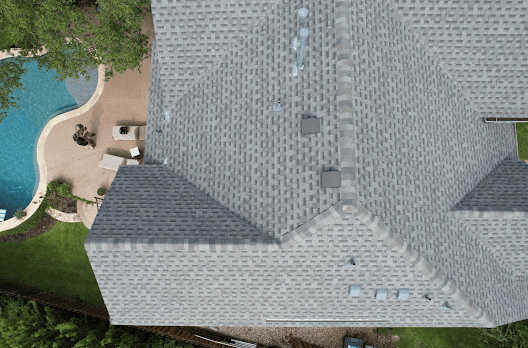
The Claim Is the Hard Part. The Roof Is Just the Result.
The contractor who knocks three days after a hail storm wants one thing: your signature. What happens after it — what gets documented, what gets claimed, what gets paid, and what quietly falls out of scope — is the part nobody explains at your door.
A roof claim in Texas is not a repair job with paperwork attached. Your carrier writes an estimate that becomes the floor of what gets paid, and anything it misses stays missed unless someone supplements for it. Your wind and hail deductible is almost certainly a percentage of dwelling coverage rather than a flat amount — 2% on a $400,000 home is $8,000 before a shingle is touched. And if your policy settles on actual cash value instead of replacement cost, the first check will be smaller than you expect.
Coverage itself is usually straightforward: standard Texas policies cover sudden hail and wind damage, and exclude wear, age, and deferred maintenance. What decides your outcome is documentation — hail damage is measured by strike density per test square and the condition of the shingle mat under lifted tabs, not by what looks bad from the ground.
We inspect free before you file, document damage the way adjusters are trained to evaluate it, meet your adjuster on the roof, review the carrier's estimate line by line, and supplement what was missed. When the roof is finished, we submit the proof of completion that releases your depreciation holdback. And because we restore as well as roof, the ceiling and insulation damage inside stays on the same estimate.
We serve Austin, Round Rock, Georgetown, Buda, Kyle, San Marcos, Dripping Springs, Lakeway, Bee Cave, and the surrounding communities. Call (737) 309-5075.
The 4 Policy Terms That Decide Your Payout
Read these four lines on your declarations page before you file. They matter more than anything a contractor tells you at your door.
RCV — Replacement Cost Value
The carrier pays what a new roof costs, but holds back recoverable depreciation until the work is done. You get a first check, we complete the roof, we submit proof of completion, and the second check releases. Most policies set a deadline to finish and claim it, so check your window.
ACV — Actual Cash Value
The carrier pays replacement cost minus depreciation for age, and there is no second check. On an older roof that deduction can absorb a large share of the claim. Many carriers quietly move roofs past ten years onto ACV at renewal — worth checking before a storm, not after.
Your Wind & Hail Deductible
Usually a percentage of dwelling coverage rather than the flat deductible printed elsewhere on the same page. At 2%, a $400,000 home owes $8,000 before the carrier pays anything — whether the loss totals $12,000 or $25,000. This is why some damage genuinely is not worth claiming.
Cosmetic Exclusions & Matching
Some policies carry an endorsement excluding hail damage that dents without causing leaks — common on impact-resistant roofs receiving a premium credit. Separately, if damaged shingles are discontinued, your carrier may owe additional slopes so the roof matches. Carriers resist this; we document and supplement for it.
How an Insurance Roof Replacement Works
The sequence from the storm through the second check — including the steps most contractors skip.
Document Before Anything Is Touched
Photograph the roof, gutters, downspouts, window screens, AC fins, and painted trim. That collateral damage corroborates your date of loss when the adjuster arrives. If water is actively coming in, call us — emergency tarping is a reimbursable temporary repair under most policies.
Free Inspection Before You File
We inspect before the claim, not after. Hail strikes counted per test square on each slope, mat condition checked under lifted tabs, granule loss and flashing documented, attic checked for daylight and staining. That report becomes the baseline we hold the adjuster's scope against.
Policy Review & Claim Decision
We read your declarations page with you: RCV or ACV, your deductible amount, any cosmetic exclusion. If the deductible is close to the repair cost, filing may not be in your interest — and we will say so before you open a claim you cannot benefit from.
We Meet Your Adjuster on the Roof
Your carrier must acknowledge the claim within 15 days and will send an adjuster. We attend that inspection, walking the same slopes and the same test squares. Having a contractor present is the single most effective thing a homeowner can do to prevent scope gaps.
Scope Review & Supplement
We check the carrier's estimate line by line. Commonly missing: code-required drip edge on a full tear-off, ice-and-water shield at valleys, ventilation upgrades, starter strip, steep-slope labor, permit fees, and haul-away. Anything missing gets a written supplement with photos and the code citation.
Build It, Then Release the Second Check
Full tear-off, decking inspected before anything goes back on, installation to manufacturer and code spec. You pay your deductible directly — legally required, and no honest contractor offers to absorb it. We then submit the final invoice and completion certificate that releases your recoverable depreciation, typically 30 to 90 days out. Keep your deductible receipt; carriers can require proof.
Claim Denied or Underpaid? You Have Options
A denial does not usually mean the damage is not real. Far more often it means the documentation did not meet the standard the adjuster required — and Texas gives you several paths short of a lawsuit.
Request a re-inspection in writing. Carrier adjusters work enormous volumes after a major hail event, and initial scopes are often genuinely incomplete rather than adversarial. A second look with your contractor present and a documented supplement in hand resolves a great many underpaid claims.
Invoke the appraisal clause. Most Texas policies include one: each side picks an independent appraiser, and if those two disagree they choose a neutral umpire, with any two of the three producing a binding award. Appraisal settles disputes about the amount of loss — not whether the loss is covered — and it is far faster and cheaper than litigation.
File a complaint with the Texas Department of Insurance. Carriers must acknowledge a claim within 15 days and accept or reject within 15 business days of receiving what they asked for. Miss those deadlines and they owe interest plus attorney fees. A filed complaint creates a paper trail carriers pay attention to.
One thing worth knowing before you file at all: every claim you open — paid or denied — lands on your CLUE report, where other carriers can see it for roughly five to seven years. That is precisely why we tell you honestly when damage is not worth claiming, rather than opening a file that costs you later and pays you nothing now.
4 Things to Know Before You Sign With Any Roofer
After every Austin hail event, contractors circle the neighborhood faster than adjusters do. Knowing these four tells you which ones actually know their business.
Your Deductible Is Not Optional
Texas law requires you to pay it, and it is a criminal offense for a contractor to waive, absorb, or rebate it — which also means the estimate was inflated to cover it. Your carrier can withhold the second check until it sees proof you paid, so the favor costs you the back half of your claim.
Never Sign an AOB Under Pressure
An assignment of benefits hands your claim rights to the contractor, who then negotiates with your carrier while you lose standing in disputes about your own roof. No contractor can require one as a condition of the contract. If you did sign at your door, Texas gives you three business days to cancel in writing.
A Contractor Cannot Be Your Adjuster
Only a licensed public adjuster or attorney can negotiate a claim on your behalf — anyone advertising otherwise is misrepresenting what they do. What we legitimately do is document damage, attend the inspection, review the scope, and supplement with code citations. That is advocacy through documentation.
Verify What Texas Does Not License
There is no state roofing license here, so ask for proof of liability and workers' comp naming your address, a physical Austin-area office, references from jobs finished a year ago, and a line-item scope. A lump-sum estimate cannot be checked against your carrier's — which is usually the point.
Roof Insurance Claim FAQs
Straight answers to what Austin homeowners ask about roof claims.
Does homeowners insurance cover roof replacement in Austin?
Usually yes for sudden covered perils — hail impact, straight-line wind, storm damage — and usually no for age, wear, or deferred maintenance. The two traps that catch people are ACV settlement on older roofs, which pays depreciated value rather than replacement cost, and percentage-based wind and hail deductibles that run far larger than expected. We read your policy with you before you file.
How long do I have to file a hail claim in Texas?
Generally two years from the date of the storm, and the clock runs from when the hail fell — not when you noticed the damage. Most policies separately require prompt notice. Uninspected roofs from past storm seasons are still common in Austin, and an inspection costs nothing, so it is worth confirming what you have before a deadline closes.
What is the difference between RCV and ACV?
RCV pays to replace your roof with like kind and quality, holding back recoverable depreciation until the work is done and then releasing a second check. ACV pays only the depreciated value and there is no second check — on an older roof that deduction can be substantial. Check your declarations page for actual cash value language, or ask your agent directly.
Do I have to pay my deductible?
Yes, Texas law requires it, and Texas made it a criminal offense in 2019 for contractors to waive, absorb, or rebate it. Your carrier can also withhold recoverable depreciation until it receives proof you paid. On a storm claim the deductible is usually a percentage of dwelling coverage — often 2%, which is $8,000 on a $400,000 home.
How do I get insurance to pay for a full replacement instead of a patch?
Documentation and presence at the inspection. Damage sufficient for full replacement is measured by hail strike density per test square and mat condition under lifted tabs, not by what looks bad from the ground. We document each slope the way adjusters evaluate it, attend the inspection, then review the carrier's scope line by line and supplement anything missing.
What is recoverable depreciation and how do I get the second check?
It is the portion your carrier holds back on an RCV policy until the work is finished. Your first check is replacement cost minus depreciation minus your deductible. Once the roof is done, we submit the final invoice and certificate of completion, and the holdback releases — typically 30 to 90 days later. Hold onto your deductible receipt in case the carrier asks for proof of payment.
My roof claim was denied — what can I do?
Start with a written re-inspection request, ideally with your contractor's documented scope attached; many underpayments get corrected here. If coverage is accepted but the amount is disputed, invoke your policy's appraisal clause. If the carrier blew its prompt-payment deadlines, file a complaint with the Texas Department of Insurance. A denial usually reflects thin documentation, not absent damage.
Suspect Hail Damage? Start With a Free Inspection
We inspect free, document what we find, and tell you honestly whether the damage warrants a claim — and what your out-of-pocket exposure looks like before you file. No obligation, and no storm-chaser pitch at your door.
Call CDG Restoration & Construction at (737) 309-5075 or request an inspection online. We handle the interior damage a leaking roof caused too, so you have one company and one point of contact for your adjuster from the first call to the final walkthrough.
Call Now