A New City With Its Own Failure Modes
Bee Cave is not an old town with old plumbing. Around 90 percent of its homes were built after 1999, with the bulk going up between the mid-2000s and the 2010s — slab-on-grade, mostly PEX supply lines, stone and stucco and Hardie-board exteriors, in master-planned subdivisions that are almost universally HOA-governed.
That matters because most restoration marketing is written about old houses: cast iron drains, galvanized supply, pier-and-beam crawl spaces. None of that describes Spanish Oaks, Falconhead, Lake Pointe or Sweetwater. What actually goes wrong in a fifteen-year-old Bee Cave home is a different list — condensate lines, appliance supply hoses, stucco assemblies that were detailed wrong at construction, and roofs that have now taken three significant hail hits in under two years.
The city sits between roughly 875 and 1,025 feet in the rolling limestone of western Travis County, bisected by Barton Creek and Little Barton Creek. We are based in Buda, about 22 to 25 miles out via SH-45 and SH-71 — usually 30 to 40 minutes.
Stucco, Weep Screeds, and Water You Cannot See
This is the single most under-diagnosed problem in Bee Cave's housing stock, and it is worth understanding properly because it does not look like a leak.
Stucco is not a waterproof barrier — it is a cladding that manages water. Any stucco assembly will let some moisture through, which is why it depends on a drainage plane behind it and a weep screed at the base to let that water escape. When the weep screed is missing, installed upside down, buried by a later patio pour, or blocked by landscaping and caulk, the water gets in and cannot get out. It sits inside the wall against the sheathing.
This is not a fringe concern. Missing or improperly installed weep screeds are recognized as one of the leading causes of stucco failure in Texas and account for a very large share of documented failures — one forensic engineering assessment puts the figure near 80 percent. Texas conditions make it worse than most states: extreme temperature swings and humidity cycles drive moisture in and out of the assembly repeatedly, and cracked stucco gives it a route.
What you notice is not water. It is a stain on interior drywall with no obvious source, a musty smell in a room, bubbling paint near the floor line, or soft sheathing found when someone finally opens the wall. By that point there is usually mold in the cavity. If your Bee Cave home has stucco and you have unexplained interior staining, the wall assembly is where we would look first — not the roof, and not the plumbing.
The Storms Bee Cave Is Still Repairing
Bee Cave sits where storm cells roll off the Hill Country and mature before they reach central Austin. The National Weather Service has named the city specifically in warnings more than once. Texas generally allows two years from date of loss to bring a property damage claim.
September 24, 2023 — Baseball and Softball Hail
The costliest hailstorm in Austin-area recorded history, and the NWS cited Bee Cave specifically. An estimated $600 million in insured losses across Travis and Williamson counties. This is the event that started the clock on a great many Bee Cave roofs.
May 9, 2024 — Hail to 3.25 Inches
The west Austin and Bee Cave corridor took stones up to 3.25 inches, landing on roofing surfaces already weakened eight months earlier. Damage compounds — a mat bruised in 2023 and struck again in 2024 fails much faster than either impact alone would explain.
May 28, 2025 — Baseball Hail and 60 mph Gusts
The NWS issued a severe thunderstorm warning naming Bee Cave for baseball-sized hail and 60 mph wind gusts. Wind at that speed breaks the sealant bond between shingle courses without necessarily removing a tab, so the roof looks intact and leaks later.
February 2021 — Winter Storm Uri
Up to eight days of sub-freezing temperatures across Travis County produced burst pipes throughout the metro. Newer PEX systems fared better than old copper, but attic runs and exterior wall penetrations still failed in numbers.
What Actually Fails in a Bee Cave Home
Slab-on-grade, PEX, stucco and stone, built during a boom. The failure list looks nothing like an older city's.
HVAC Condensate Lines
The most common internal water trigger in newer slab homes here, and the most overlooked. A clogged or disconnected condensate line runs quietly into a ceiling or wall cavity for weeks. Attic air handlers make it worse — the water has a long way to travel before anyone sees it.
Appliance Supply Lines
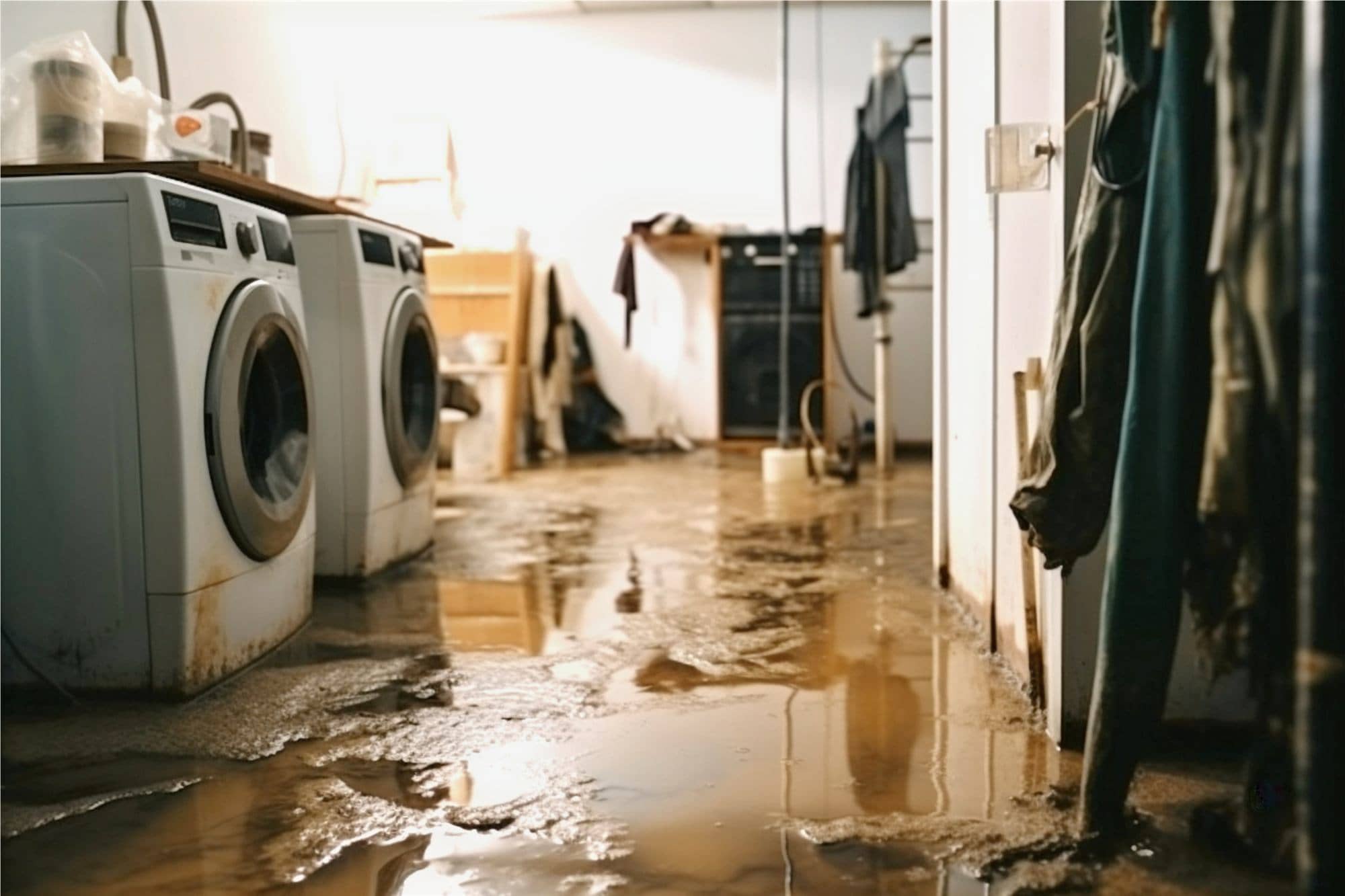
Washing machine hoses, water heater connections, dishwasher and icemaker lines. On a slab, that water spreads laterally under flooring and into wall bases well beyond the visible wet patch.
Stucco Moisture Entrapment
Failed or blocked weep screeds, cracked stucco and tired caulk joints let water into the assembly with no route out. The damage is inside the wall, and the first symptom is usually interior staining or a smell rather than anything visible outside.
Slab Movement on Thin Expansive Clay
Thin residual clays over fractured Edwards limestone still swell and shrink with the wet-dry cycle, stressing supply lines beneath the slab. Warm spots on flooring and unexplained water bill spikes are the signs worth acting on.
Aging 2000s Roofs, Hit Three Times
The dominant architectural asphalt shingle stock is now roughly 15 to 25 years old — inside or past normal replacement age even before 2023, 2024 and 2025 each added damage.
Flash Runoff Into Creek Bottoms
Drainage off rocky hillsides is fast and concentrates hard in the low crossings. The city identifies Little Barton Creek as its most flood-prone waterway and installed USGS stream gauges specifically so residents get warning of a rapid rise.
Little Barton Creek and the Low-Water Crossings
Bee Cave's flood risk is concentrated rather than general. Barton Creek and its tributary Little Barton Creek run eastward through the city, and Little Barton is the one the city flags as most flood-prone — particularly at the low-water crossings along Hamilton Pool Road and Great Divide Drive.
The mechanism is the one that catches people out across the Hill Country: thin soil over limestone does not absorb rainfall, so runoff arrives in the creek bottoms within minutes rather than hours. The city's installation of USGS stream gauges to give residents early warning tells you how quickly it happens.
The insurance consequence is worth being blunt about. A standard homeowners policy excludes flood. Water rising out of a creek and into a structure needs separate coverage through the NFIP or a private carrier, and that coverage carries a waiting period — it cannot be arranged once rain is in the forecast. Water entering through a hail-damaged roof, by contrast, is generally covered, because the covered peril is the hail. Same water in the house, entirely different claim outcome depending on the route it took.
A Young Housing Stock Means Construction Defects Are Still in Play
Because so much of Bee Cave went up after 1999, a meaningful number of homes here are still inside the windows where a construction defect is legally actionable — which is not true in older parts of the metro.
The Texas Residential Construction Liability Act, Texas Property Code Chapter 27, governs residential construction defect claims. Before filing suit or demanding arbitration, a homeowner must give the contractor written notice by certified mail describing all known defects and then allow 60 days during which the contractor can inspect and make a written offer to repair or compensate. Separately, Texas has a statute of repose under Civil Practice and Remedies Code § 16.009: generally 10 years from substantial completion, with a shorter 6-year period applying to detached one- and two-family homes where the builder provided a qualifying written warranty meeting specific statutory requirements. Without that warranty, the 10-year period governs.
We are a restoration and construction contractor, not a law firm, and we will not advise you on whether to pursue a claim. What we can do is document what we actually find when we open a wall — the condition of the weep screed, the drainage plane, the flashing, the sheathing — in a form that is useful to you whatever you decide to do with it. If your stucco has been trapping water since the house was built, that is worth knowing regardless of where the paperwork ends up.
HOA Approval and Roof Permits in Bee Cave
Nearly every subdivision in Bee Cave is HOA-governed with an active architectural review committee, and material or color changes generally require pre-approval before roofing work begins. Spanish Oaks and Falconhead in particular carry higher concentrations of concrete tile and standing-seam metal, and the guidelines exist to keep the streetscape consistent.
Roof replacements in Bee Cave are permitted through the City of Bee Cave. Permit triggers genuinely differ across this metro — the City of Austin generally exempts asphalt-over-asphalt unless the property is in the Wildland-Urban Interface and half or more is being replaced, Georgetown requires a permit for any new roof, and Lakeway's trigger is work that alters the design, material or slope. We confirm the current requirement with the city for your specific address rather than assuming, and we pull the permit as part of the job.
On material choice, Texas Property Code § 202.011 prevents an association from stopping you from installing shingles designed primarily to be wind and hail resistant and rated by a nationally recognized testing laboratory, such as UL 2218 Class 4. Reasonable aesthetic standards still apply, and in practice a Class 4 shingle in a complementary earth tone is usually the smoothest path through architectural review. Texas Insurance Code § 2253.002 separately requires insurers here to offer a premium discount for qualifying impact-resistant roofing, with each carrier setting its own amount, product list and documentation — ask yours before you choose.
Our Services in Bee Cave
Restoration and construction under one contract — including the commercial and mixed-use property around the Hill Country Galleria and the SH-71 corridor.
Roof Repair in Bee Cave
Hail bruising from 2023, 2024 and 2025, wind-broken sealant bonds, tile and metal repair, and the flashing details that leak long before the field of the roof does.
Learn moreRoof Replacement in Bee Cave
Full replacement for the 2000s stock now past service life, including Class 4 impact-resistant options that clear architectural review.
Learn moreWater Damage Restoration in Bee Cave
Condensate line failures, appliance supply breaks, slab leaks and storm intrusion — extracted, dried to a metered standard, and rebuilt.
Learn moreMold Remediation in Bee Cave
Including the mold that grows inside stucco wall assemblies where trapped moisture has had years to work. We fix the moisture route, not just the growth.
Learn moreFire Damage Restoration in Bee Cave
Emergency board-up, soot and smoke removal, odor treatment and full reconstruction — including drying the water the fire department left behind.
Learn moreStorm Damage & Reconstruction
Emergency tarping through finished rebuild, plus kitchens, bathrooms and additions. We do not do landscaping or build pools.
Learn moreNeighborhoods We Cover in Bee Cave
Spanish Oaks, Falconhead, Falconhead West, Lake Pointe, The Homestead, The Uplands, Ladera, Bella Colinas, Sweetwater, Provence, Rocky Creek, Signal Hill Estates, Spillman Ranch, Bee Caves West and East Village.
That is ZIP code 78738 in western Travis County. If you are near the Hill Country Galleria, Bee Cave Central Park, Falconhead Golf Club, or along the SH-71, RM-620 or Hamilton Pool Road corridors, you are inside our area — and we handle commercial and mixed-use property there as well as houses.
Bee Cave Questions We Get Asked
I have a stain on an interior wall but no roof leak. What is it?
In a Bee Cave home with stucco, the wall assembly is the first place we would look. Stucco is not waterproof — it relies on a drainage plane behind it and a weep screed at the base to release the moisture that inevitably gets through. When that screed is missing, installed incorrectly, buried by a later patio pour, or sealed shut by caulk and landscaping, water enters and has no way out. It sits against the sheathing and shows up inside as staining, bubbling paint near the floor, or a musty smell. Missing or badly installed weep screeds are one of the leading causes of stucco failure in Texas, and by the time it is visible inside there is usually mold in the cavity.
My roof was hit in 2023, 2024 and again in 2025. Is that one claim or three?
Generally three separate losses with three separate dates, and that distinction matters more than people expect. Carriers assess damage against the specific event you report, and unrepaired damage from an earlier storm can complicate a later claim — an adjuster may attribute part of what they see to a prior event you never filed on. Bee Cave has had an unusually compressed sequence: the September 2023 storm the NWS named the city in, hail to 3.25 inches in May 2024, and a warning for baseball-sized hail and 60 mph gusts in May 2025. If none of those has been documented on your roof, an inspection now is worth more than it would be in most markets.
Do I need a permit to replace my roof in Bee Cave?
Roof replacements here are permitted through the City of Bee Cave, and we confirm the current requirement for your specific address before scoping rather than assuming. It is worth knowing that permit triggers genuinely differ across this metro: Austin generally exempts asphalt-over-asphalt unless the property is in the Wildland-Urban Interface and 50% or more is being replaced, Georgetown requires a permit for any new roof, and Lakeway's trigger is work that alters the design, material or slope. A contractor working the whole region who assumes one rule applies everywhere will get it wrong somewhere. We pull the permit as part of the job.
What actually causes most water damage in newer Bee Cave homes?
Not the things people expect. In a slab-on-grade home built in the last twenty years with PEX supply lines, the most common triggers are HVAC condensate line failures and appliance supply lines — washing machine hoses, water heater connections, dishwasher and icemaker feeds. Condensate lines are the sneakiest: a clog or disconnection at an attic air handler drips into a ceiling or wall cavity for weeks with nothing visible until the drywall stains. If your air handler is in the attic, having the condensate line and pan checked annually is the cheapest water damage prevention available.
My house is 15 years old. Could a defect from construction still be my builder's problem?
Possibly, and Bee Cave is unusual in that so much of the housing stock is young enough for this to be a live question. Texas Property Code Chapter 27 requires a homeowner to send the contractor written notice by certified mail describing all known defects and to allow 60 days for inspection and a written offer before filing suit or arbitration. Texas also has a statute of repose under Civil Practice and Remedies Code § 16.009 — generally 10 years from substantial completion, or 6 years for detached one- and two-family homes where the builder provided a qualifying written warranty. We are contractors, not attorneys, and we will not advise you on whether to pursue anything. What we will do is document exactly what we find when we open the wall, in a form that is useful to you either way.
Is creek flooding covered by my homeowners policy?
No. Standard homeowners policies exclude flood, so water rising out of Barton Creek or Little Barton Creek and into a structure requires separate NFIP or private flood coverage — which normally carries a waiting period and therefore cannot be arranged once rain is forecast. Water entering through a hail-damaged roof is a different matter and is generally covered, because the covered peril is the hail rather than the water. The city installed USGS stream gauges on Little Barton Creek precisely because rises there happen fast; if you are near the low-water crossings on Hamilton Pool Road or Great Divide Drive, it is worth confirming what you hold before you need it.
Do you handle commercial property in Bee Cave?
Yes. The Hill Country Galleria and the SH-71 and RM-620 commercial corridor are inside our area, and commercial restoration runs on the same principles as residential — with the added constraint that we schedule around your operating hours where possible and document to the standard a commercial carrier expects. Containment matters more on a commercial job, because keeping the unaffected part of the building open and operating is usually the whole point.
How fast can you get to Bee Cave from Buda?
About 22 to 25 miles via SH-45 westbound to SH-71, typically 30 to 40 minutes outside peak traffic. For active water intrusion we will talk you through shutting off the supply and protecting what is below while a crew is en route. Speed matters here: in this climate an unresolved intrusion becomes a mold problem within 24 to 48 hours. We answer 24/7 for emergencies, and schedule free estimates around you for planned work.
Hail or Water Damage in Bee Cave? We Will Look for Free.
Inspections and estimates cost nothing and carry no obligation — including opening up a stucco wall assembly to find out where the water is actually getting in. We put the scope in writing before anything starts.
Call Now