Water Moves Differently in the Hill Country
Dripping Springs sits at roughly 1,148 feet on the eastern edge of the Edwards Plateau, right on the geologic seam where the Blackland Prairie gives way to the Hill Country. That position explains almost everything about how property here takes damage.
The uplands are shallow rocky loam and caliche hardpan over limestone. Rock does not absorb rainfall. So when a Hill Country storm parks over the watershed, the water does not soak in and rise gradually the way it does on deep prairie soil east of I-35 — it sheets off the rock and concentrates in the creek corridors within minutes. Onion Creek actually originates in the hills west of town, and Little Barton Creek runs through parts of the city. Both fill fast.
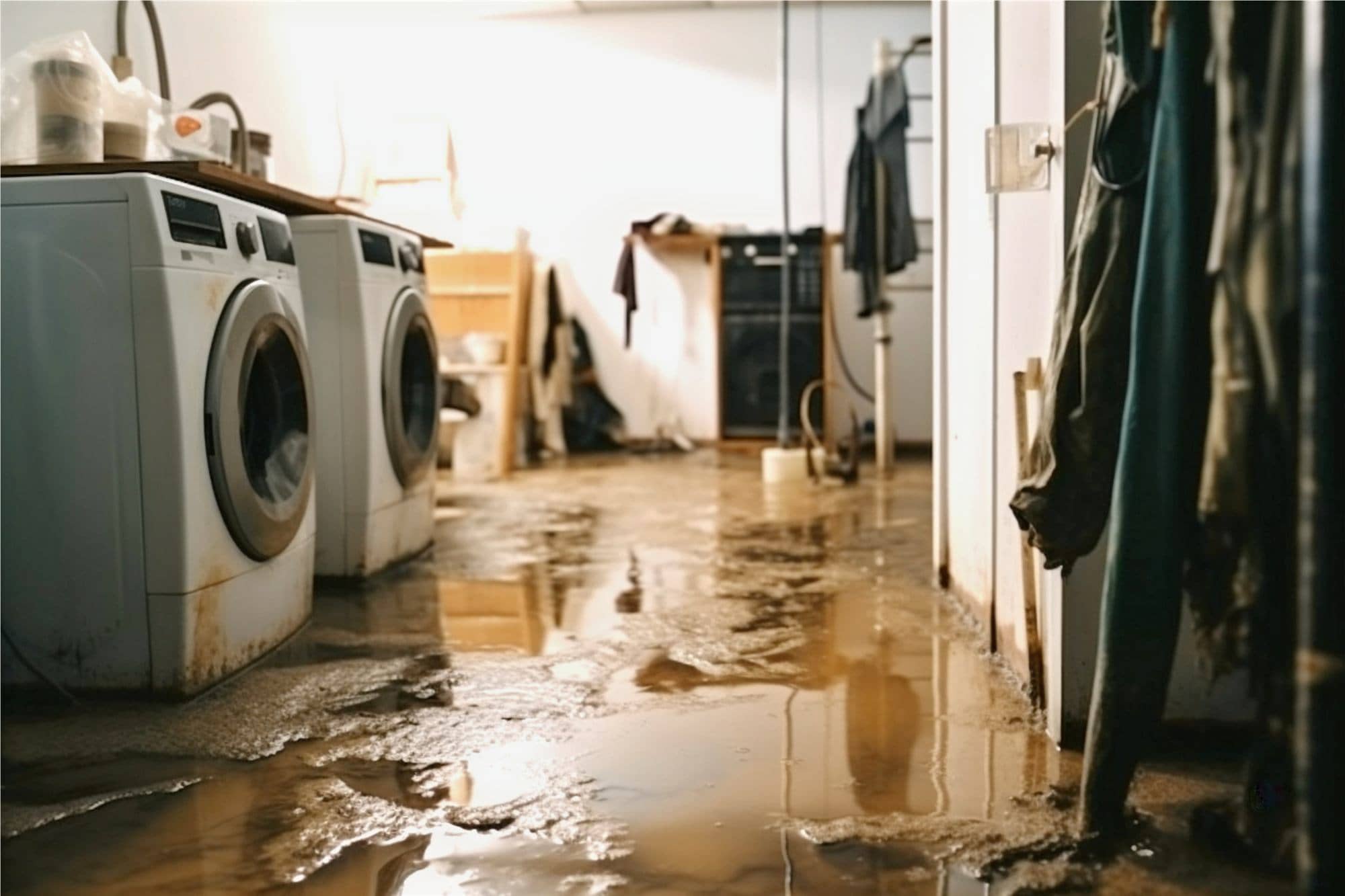
That is not a theoretical risk. On May 3, 2019, a storm dropped several inches over Dripping Springs in a couple of hours, and the co-owner of a downtown restaurant described going from two or three inches of water in the parking lot to four or five feet in under ten minutes. Twenty-seven units at The Springs Apartments flooded. Local reporting afterward followed a Dripping Springs family dealing with mold in a flooded apartment — which is the part of a flash flood that shows up weeks later.
We are based in Buda, roughly 20 miles east via RM 967 — about half an hour, which matters when the window between water in the structure and mold in the structure is 24 to 48 hours.
What Dripping Springs Has Actually Been Through
The 78620 ZIP code has at least 16 documented damaging hail events on record, and the flooding history is worse than the population size suggests. Texas generally allows two years from date of loss to bring a property damage claim.
May 9, 2024 — Softball-Sized Hail
Stones up to 4.25 inches reported 12 miles southwest of town, with 2.0 to 2.5-inch hail near the eastern ZIP boundary. Hays County declared a disaster. Hail at that size does structural damage to a roof, not cosmetic damage — and it commonly dents metal panels that homeowners assumed were hail-proof.
May 3, 2019 — The Downtown Flash Flood
Several inches in a couple of hours put four to five feet of water through ground-floor businesses in under ten minutes, flooded 27 units at The Springs Apartments, closed roads and wrote off vehicles. The speed is the point: there is no time to move anything.
April 26, 2023 — Golf-Ball Hail
1.75-inch hail confirmed directly over Dripping Springs by a trained spotter. That size causes functional damage to architectural shingles — bruising the mat under the granules — without necessarily looking dramatic from the ground.
February 2021 — Winter Storm Uri
A sustained multi-day hard freeze burst pipes across the metro. Homes here were built for Hill Country summers, not for days below freezing, and attic and exterior-wall runs were rarely insulated for it.
May 2015 — The Blanco River Flood
The Blanco rose more than 41 feet near Wimberley in the same county. It is the event that recalibrated what Hays County residents consider possible, and it is worth remembering when deciding whether flood coverage is worth carrying.
October 2013 and October 1998
The Halloween floods along Onion Creek, and before that a 1998 event that put over 20 inches of rain into parts of the region. These watersheds have a long memory and a short fuse.
Most “Dripping Springs” Addresses Are Not Actually in Dripping Springs
This is the single most practical thing on this page, and almost nobody explains it.
The City of Dripping Springs itself has fewer than 8,000 residents. The 78620 ZIP code has around 23,700. That gap is not a rounding error — it means a large share of people with a Dripping Springs mailing address live in unincorporated Hays County, outside city limits, under a different set of rules.
It matters most for permits. A residential roof replacement inside city limits is permitted through the City of Dripping Springs Building Department. A property in unincorporated Hays County permits through the county instead. Both jurisdictions adopt the International Residential Code by local ordinance, so the technical standard for the roof assembly is broadly consistent — but the application, the fee and the inspection route are not.
A contractor who does not check which side of the line your property sits on will either pull the wrong permit or skip it. Neither is a problem you discover immediately; both are problems you discover at resale or at your next claim. We confirm jurisdiction before scoping the work, and we pull the permit as part of the job rather than asking you to do it.
Well Water and Septic Change the Water-Damage Picture
Plenty of Dripping Springs properties are on private wells and septic rather than municipal water and sewer, and that changes what fails and how you find out.
Hill Country aquifer water is hard and heavy in dissolved minerals. In homes plumbed in copper — generally anything built through the late 1990s — that mineral content accelerates internal corrosion and produces pinhole leaks earlier than the same pipe would fail on treated municipal supply. In 2000s-and-later construction plumbed in CPVC, prolonged exposure to aggressive water and heat can embrittle the pipe over time. PEX generally handles it better, which is why newer subdivision construction favors it.
The detection problem is the real issue. On municipal water, a slab leak often announces itself as a water bill that suddenly jumps. On a private well there is no bill to jump. A leak under the slab can run for months, quietly saturating subfloor and wicking moisture up into flooring and baseboards, and the first sign is frequently a musty smell or buckling floor rather than a number on a statement. If your home is on a well, the things to watch for are a pump cycling more often than it used to, a warm spot on a floor slab, or unexplained damp.
Septic adds its own wrinkle. A saturated drain field after a heavy rain event can back up into the house, and that is Category 3 water — contaminated, requiring removal of affected porous materials rather than drying in place.
What Fails in a Dripping Springs Home
The housing stock here is younger than most of the metro — the bulk of it went up between 2005 and 2022 — but the terrain creates failure modes you do not see on flat prairie lots.
Differential Slab Movement
Valley bottoms hold deep expansive clay while the uplands are shallow soil over rock. A single lot can span both. That difference produces differential movement under post-tension slabs during drought-to-downpour cycles, and the supply and drain lines running beneath take the strain.
Hillside Pier-and-Beam and Drilled Piers
On sloped lots and rural-edge properties where limestone is near the surface, pier-and-beam and drilled pier systems are common. They move less, but the crawl space underneath is a persistent moisture and mold concern in a humid climate.
Copper on Well Water
Pre-2000 homes on aggressive mineral-heavy well water corrode from the inside and develop pinhole leaks. With no water bill to spike, these are frequently found late.
Architectural Shingles Aging Fast
Hill Country UV and wide day-to-night temperature swings age shingles beyond their calendar years. Ridge caps and pipe boot flashings fail first, and they fail well before the field of the roof does.
Metal Roofs That Still Dent
Standing seam and corrugated metal is common on custom and rural-edge Hill Country homes and genuinely outperforms shingles against hail. But softer aluminum panels still dent at golf-ball size, and dented panels are a coverage conversation with your carrier rather than a straightforward replacement.
Condensation in Stone and Stucco Assemblies
Hill Country stone and stucco construction creates thermal bridging, and in a Central Texas summer that produces condensation on interior surfaces. Where vapor barriers underperform or the attic assembly is poorly sealed, mold grows in insulation and on roof decking with no leak involved at all.
The 2005 to 2015 Build Wave Is Now in the Claim Window
Belterra, Highpointe, Caliterra, Headwaters, Reunion Ranch and the rest of the master-planned communities went up largely between 2005 and 2022, and most were roofed with 30-year architectural asphalt shingles.
A large share of that stock is now ten to twenty years old. In this climate a 30-year shingle does not deliver thirty years — Hill Country UV, thermal cycling and repeated hail compress it substantially. Combine an aging roof with 16 documented hail events over the ZIP code and you get a very large number of properties sitting in the window where accumulated granule loss and hail bruising add up to a claim-eligible condition that nobody has looked at.
If your roof went on when your subdivision was built and you have not had it inspected since the April 2023 or May 2024 hail, that is worth an hour. An inspection costs nothing and it settles the question either way — including when the honest answer is that your roof is fine and you should spend the money elsewhere.
HOA Approval Often Has to Come Before the Permit
Highpointe, Belterra, Reunion Ranch and the other master-planned communities run architectural standards requiring replacement roofing to match the originally approved palette, which constrains shingle color and profile.
The sequencing catches people out. In several of these communities the HOA architectural review has to be cleared before the roofing permit is pulled, not alongside it. A contractor unfamiliar with that order starts the clock in the wrong place, and the result is either a delay while approval catches up or, worse, work that has to be redone because the wrong product went on.
One thing an HOA cannot do is refuse you an impact-resistant roof. Texas Property Code § 202.011 prohibits a property owners' association from preventing installation of shingles designed primarily to be wind and hail resistant and rated by a nationally recognized testing laboratory — UL 2218 Class 4, for instance. Reasonable aesthetic standards on color and profile still apply, and you should still submit. But in a ZIP code with this hail record, a blanket refusal of a rated product is not something the association gets to enforce. Texas Insurance Code § 2253.002 separately requires insurers here to offer a discount for qualifying impact-resistant roofing, with each carrier setting its own amount and documentation.
Our Services in Dripping Springs
Restoration and construction from one company, which matters more on rural-edge properties where getting a second contractor out is its own delay.
Roof Repair in Dripping Springs
Hail bruising, wind damage, failed ridge caps and pipe boot flashings — the components that fail first here — repaired under the correct jurisdiction's permit.
Learn moreRoof Replacement in Dripping Springs
Full replacement for the 2005 to 2015 build wave now reaching end of life, including Class 4 impact-resistant upgrades your HOA cannot refuse.
Learn moreWater Damage Restoration in Dripping Springs
Flash flood intrusion, slab leaks on well water, freeze bursts and septic backups — extracted, dried to a metered standard, and rebuilt.
Learn moreMold Remediation in Dripping Springs
The 24-to-48-hour window after a flash flood is the whole game. We also find mold from slab leaks that ran undetected on well-water properties with no bill to flag them.
Learn moreFire Damage Restoration in Dripping Springs
Emergency board-up, soot and smoke removal, odor treatment and full reconstruction — including drying the water the fire department left behind.
Learn moreStorm Damage & Reconstruction
Emergency tarping through finished rebuild after hail, wind and flood — plus kitchens, bathrooms and additions when the work is planned rather than urgent.
Learn moreNeighborhoods and Areas We Cover
Belterra, Highpointe, Caliterra, Headwaters, Reunion Ranch, Sunset Canyon, Howard Ranch, Heritage Oaks, Sawyer Ranch, Texas Heritage Village, Deer Creek Ranch, Twin Lake Hills, Valley Lake Hills, Montebella, Harrison Hills and Arrowhead Ranch — plus the historic Mercer Street district and the rural properties across 78620.
We cover both the incorporated city and unincorporated Hays County addresses that carry a Dripping Springs postal address. If you are out along Fitzhugh Road, Hamilton Pool Road, RR 12 or anywhere off US-290 west of Buda, you are inside our area.
Dripping Springs Questions We Get Asked
Do I need a permit to replace my roof in Dripping Springs?
Yes, but where you get it depends on whether your property is inside city limits. A residential roof replacement inside the City of Dripping Springs is permitted through the city's Building Department. A property in unincorporated Hays County — which is where a large share of Dripping Springs mailing addresses actually sit — permits through the county instead. Both adopt the International Residential Code by local ordinance, so the roof assembly standard is broadly consistent, but the application and inspection route differ. We confirm which jurisdiction applies to your address before scoping, and we pull the permit rather than asking you to.
How do I know if my address is in the city or in unincorporated Hays County?
A Dripping Springs mailing address is not the same thing as being inside the city. The city itself has fewer than 8,000 residents while the 78620 ZIP code has around 23,700, so a large fraction of people who say they live in Dripping Springs are legally in unincorporated Hays County. It affects permitting, some code enforcement, and occasionally which emergency services respond. The city and county both publish jurisdiction maps, and we check the address before we quote — it is the first thing that determines how the job is run.
My house is on a well. Does that change anything about a water leak?
It changes how you find it, which is the hard part. On municipal water a slab leak usually shows up as a water bill that jumps for no reason. On a private well there is no bill, so the leak can run for months while it saturates subfloor and wicks into flooring and baseboards — and the first symptom is often a musty smell or a soft floor rather than a number. Watch for the pump cycling more often than it used to, a warm patch on a slab floor, or unexplained damp. Hill Country well water is also hard and mineral-heavy, which corrodes copper supply lines from the inside faster than treated municipal water does, so pre-2000 homes here develop pinhole leaks earlier than you would expect.
How fast does flooding actually happen here?
Faster than almost anywhere else in the metro, and the geology is why. The uplands are shallow soil over limestone, and rock does not absorb water — it sheds it into the creek corridors within minutes. On May 3, 2019, a downtown business owner described going from two or three inches of water in the parking lot to four or five feet in under ten minutes. Twenty-seven units at The Springs Apartments flooded in the same event. The practical consequence is that there is no meaningful warning window for moving contents, and that flood preparation here has to be done in advance rather than on the day.
Will my homeowners insurance cover flood damage?
For rising or surface water, no. Standard homeowners policies exclude flood; that requires separate coverage through the NFIP or a private carrier, and it normally carries a waiting period before it takes effect, so it cannot be arranged once a storm is forecast. What a homeowners policy generally does cover is water that entered through storm-damaged building envelope — rain through a roof that hail or wind opened up. Two houses on the same street can take water the same night and have entirely different outcomes based on the route it took. We will tell you honestly which category your loss falls into, including when the answer means your homeowners carrier will not pay.
Is a metal roof worth it here for hail?
Generally yes, with one honest caveat. Standing seam and corrugated metal outperform asphalt shingles against hail and handle Hill Country UV far better, which is why they are common on custom and rural-edge homes. But softer aluminum panels still dent under golf-ball-sized stones, and a dented-but-not-punctured metal roof turns into a cosmetic-versus-functional damage argument with your carrier. Steel panels and heavier gauges hold up better. If hail resistance is the main reason you are considering metal, ask about the gauge and the material, not just the profile.
My subdivision HOA controls roof color. Can they stop me getting impact-resistant shingles?
No. Texas Property Code § 202.011 prevents a property owners' association from stopping you from installing shingles designed primarily to be wind and hail resistant and rated by a nationally recognized testing laboratory, such as UL 2218 Class 4. Highpointe, Belterra, Reunion Ranch and the others can still apply reasonable aesthetic standards on color and profile, and you do still need to submit for approval. One local sequencing detail worth knowing: in several of these communities the architectural approval has to be cleared before the roofing permit is pulled, not at the same time. Getting that order wrong is the most common cause of delay on a Dripping Springs roof job.
How quickly can you get out here from Buda?
About 20 miles west via RM 967, typically half an hour. That matters more here than the mileage suggests, because the window between water entering a structure and mold establishing in it is roughly 24 to 48 hours — and after a flash flood, every affected property in the area is calling at once. We answer 24/7 for emergencies. For planned work like a roof replacement or a remodel we schedule the free estimate around you.
Storm or Water Damage in Dripping Springs?
Inspections and estimates are free and carry no obligation. We will confirm which jurisdiction your property sits in, tell you what the damage actually is, and put the scope in writing before anything starts.
Call Now