Remodeling That Handles What It Finds
Most remodelers hand you a scope and a price. Then a wall opens, there is a rotted sill plate and black mold behind it, and suddenly you are refereeing between your remodeler and a restoration company while your kitchen sits half-demolished.
CDG Restoration & Construction does both trades under one contract. Water damage, mold remediation, and structural drying are routine days for our crew — so when demo exposes something ugly, the project keeps moving instead of stopping while you find a second company.
That matters more in Central Texas than most places. Shifting clay soil drives slab leaks, freezes crack supply lines, and roof leaks run unseen for months. Open a wall in a pre-2000 home in South Austin, Hyde Park, or older Buda and there is a real chance of finding moisture nobody suspected.
We remodel across the Austin metro, including Round Rock, Georgetown, Buda, Kyle, San Marcos, Dripping Springs, Lakeway, Bee Cave, and the surrounding communities. Estimates are free and written line by line: (737) 309-5075.
Austin Remodeling Services — and What They Typically Cost
Most remodeling sites will not put a number in front of you. These are honest Austin market ranges so you can size a budget before you call. Your actual number depends on scope, finishes, and what the walls turn out to contain.
Kitchen Remodeling
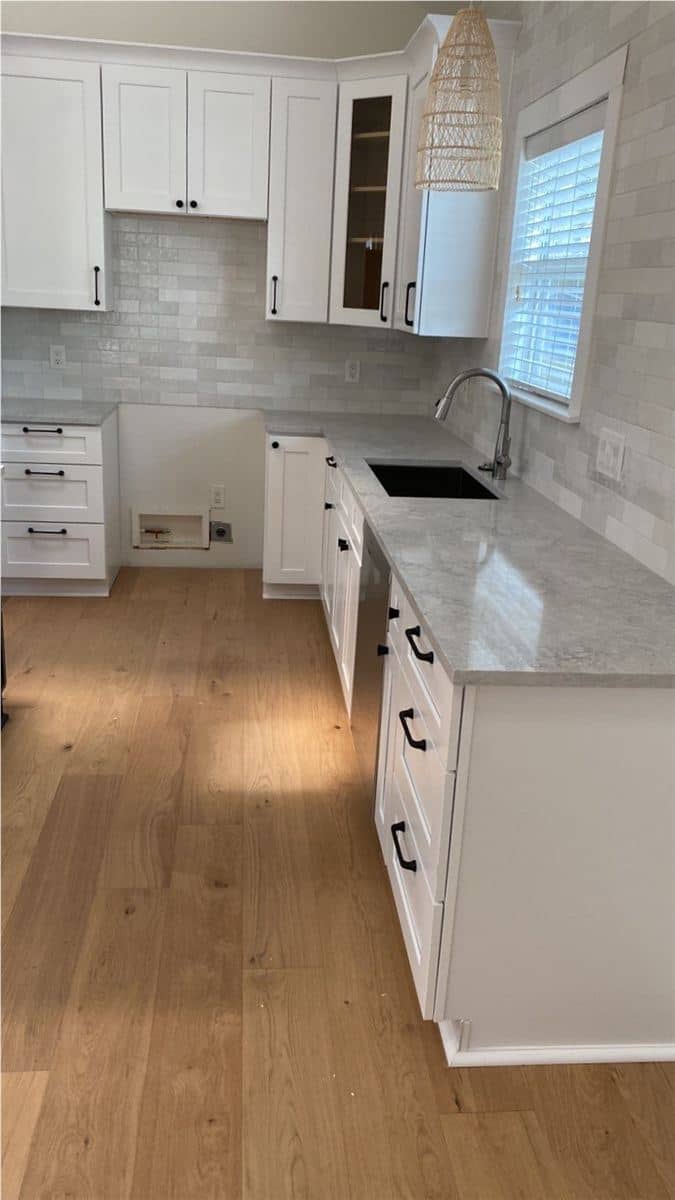
Layout changes, cabinets, countertops, backsplash, flooring, lighting, and licensed plumbing and electrical. Mid-range Austin kitchens typically run $35,000 to $110,000; cosmetic refreshes land well below that, custom work above it.
Bathroom Remodeling
Tub-to-shower conversions, tile, vanities, and fixtures — built over real waterproofing, not just backer board. Most Austin bathrooms run $18,000 to $45,000 depending on size and finish level.
Shower Remodel & Tile
Failed grout, cracked pan liners, and missing waterproofing drive most shower remodels — and most of the mold we find behind them. We rebuild with a proper membrane so the next owner never has this conversation.
Whole-Home Renovation
Full gut renovations and open-plan conversions, phased so you know what happens when. Austin whole-home projects generally start around $120,000 and scale with square footage and finish level.
Flooring Installation
Hardwood, LVP, tile, and stone, including subfloor prep — roughly $4 to $14 per square foot installed depending on material and what is under the old floor.
Hidden Damage Repair
Rotted framing, old water damage, and mold discovered mid-demo. Most remodelers stop and send you elsewhere. We remediate and rebuild it on the same contract, without pausing the schedule.
How Your Remodel Runs, Start to Finish
Every phase has a defined deliverable before the next one starts. That is how projects stay on budget instead of drifting.
Discovery Walkthrough
We walk the space, document existing conditions, and build a preliminary scope. No drawings yet — this is the conversation that decides whether your project is feasible at your budget before anyone spends money.
Design & Selections
Drawings, engineering where needed, and every material and finish locked in before permits are submitted. Locking selections early is the single most effective thing a homeowner can do to control cost — changes after this point are expensive.
Contract & Permits
A written contract with line-item scope, milestone payments, and a clear change-order policy. Then we pull the building and trade permits and confirm any HOA or historic district approvals. We never ask homeowners to pull their own permits.
Demolition
Selective or full demo per approved plans, with lead-safe practices in pre-1978 homes. If demo exposes water damage or mold — common in Central Texas — the same team handles it without stopping the clock.
Rough-In & Inspections
Framing, plumbing, electrical, and HVAC rough-in by licensed trades, inspected by the city before anything gets closed up. Nothing gets covered until it passes — which is how you avoid discovering a failed inspection when you sell.
Finishes & Final Walkthrough
Insulation, drywall, tile, flooring, cabinets, countertops, and paint, then final inspections. We walk the space with you, complete the punch list, and hand over warranty documents, permit closeout, and lien waivers from every sub and supplier.
Right-Sizing Your Remodel Budget
The most useful thing a contractor can tell you is not what something costs — it is whether the scope you have in mind fits the house you own.
Kitchens return the most reliably, and the math favors bringing yours up to the standard for your block rather than past it. A minor kitchen update — countertops, hardware, paint, appliances, no walls moved — has historically recovered most of its cost at resale. A high-end custom kitchen in a mid-range home returns far less, because the neighborhood sets the ceiling no matter how good the kitchen is.
Bathrooms return a lower percentage, with one exception: a leaking shower that has visibly damaged the surround is a genuine resale liability, and fixing it pays for itself. Cosmetic upgrades to a bathroom that already works return less.
Whole-home renovations are the most project-specific, and the honest answer depends on what the home was before and what the street looks like now. We will tell you when a scope is too much for the property — that conversation costs you nothing and can save you a great deal.
4 Things to Verify Before You Sign With Any Remodeler
Texas issues no state general contractor license, which puts the verification on you. These four take ten minutes and rule out most bad outcomes.
City Contractor Registration
Anyone pulling permits in Austin must be registered with the city, and you can search it yourself. No registration means the work goes unpermitted or you pull the permit — which puts the legal exposure on you.
Insurance & Trade Licenses
Ask for a certificate of insurance naming your address, including workers' compensation — Texas does not require it, so a crew without it can leave an injured worker's bills with you. Electricians, plumbers, and HVAC techs should all be licensed and verifiable.
Lead-Safe Certification
If your home predates 1978 — common in Hyde Park, Clarksville, and Travis Heights — disturbing painted surfaces requires an EPA-certified renovation firm. We flag whether this applies to your project at the estimate stage.
Lien Waivers & Written Warranty
An unpaid subcontractor can lien your property even if you paid your contractor in full — lien waivers at each draw are what prevent that. Expect at least a one-year written workmanship warranty on top of manufacturer coverage.
Austin Remodeling FAQs
Straight answers to what Austin homeowners ask before starting a remodel.
How much does a home remodel cost in Austin?
Typical Austin ranges: bathrooms $18,000 to $45,000, kitchens $35,000 to $110,000 for mid-range work, and whole-home renovations starting around $120,000. Your number depends on the size of the space, your finish level, whether structural changes are involved, and what the walls turn out to contain. Budget a 10 to 20 percent contingency on any older home, and get a written line-item estimate before committing.
How long does a kitchen or bathroom remodel take?
Plan on roughly eight to twelve weeks for a bathroom and twelve to twenty for a kitchen, measured from permit submission to final walkthrough. What stretches projects most: custom cabinet and countertop lead times, plan review revisions, and whatever appears when the walls open. You get a realistic schedule with those waiting periods built in.
Do I need a permit to remodel my house in Austin?
Yes for anything structural, electrical, plumbing, or mechanical — moving a wall, changing a circuit, adding a fixture. Purely cosmetic work like paint, flooring over an existing subfloor, and cabinet refacing generally does not need one. CDG pulls every required permit; any contractor asking you to pull your own is shifting legal risk onto you.
Can I stay in my home during a remodel?
Usually yes. Single-room projects are disruptive but livable, and we phase the work to keep the rest of the house functional. A full gut renovation, or anything that takes out your only kitchen or bathroom for weeks, is a different calculation. We give you a straight answer for your specific project at the estimate stage rather than a blanket policy.
What happens if you find water damage or mold behind a wall?
We handle it, on the same contract, without stopping the project. That is the core reason to hire a company that does both restoration and remodeling — a pure remodeler has to halt work and send you to find a separate remediation contractor while your kitchen sits open. If there is an insurance claim involved, we document it for your adjuster too.
Does Texas require a contractor license for remodeling?
No — Texas issues no state general contractor license, which makes your own verification more important. Check City of Austin contractor registration, a certificate of insurance that includes workers' compensation, and active trade licenses for the electricians, plumbers, and HVAC techs on your job. We provide all of it on request.
What if my home is in a historic district or floodplain?
Both add steps worth knowing about before you pay for drawings. Historic districts like Clarksville and Hyde Park require design review approval for exterior changes before a permit can be issued, and floodplain properties carry elevation requirements. We check both during the estimate phase so neither becomes a surprise mid-project.
Ready to Talk About Your Austin Remodel?
Estimates are free and written line by line — not a lump sum you cannot check. We walk the space with you, tell you honestly what we find, and put the scope and the number in writing before anything starts.
Call CDG Restoration & Construction at (737) 309-5075 or request your estimate online. And if the project turns up water damage or mold behind a wall, you already have a restoration contractor on site.
Call Now