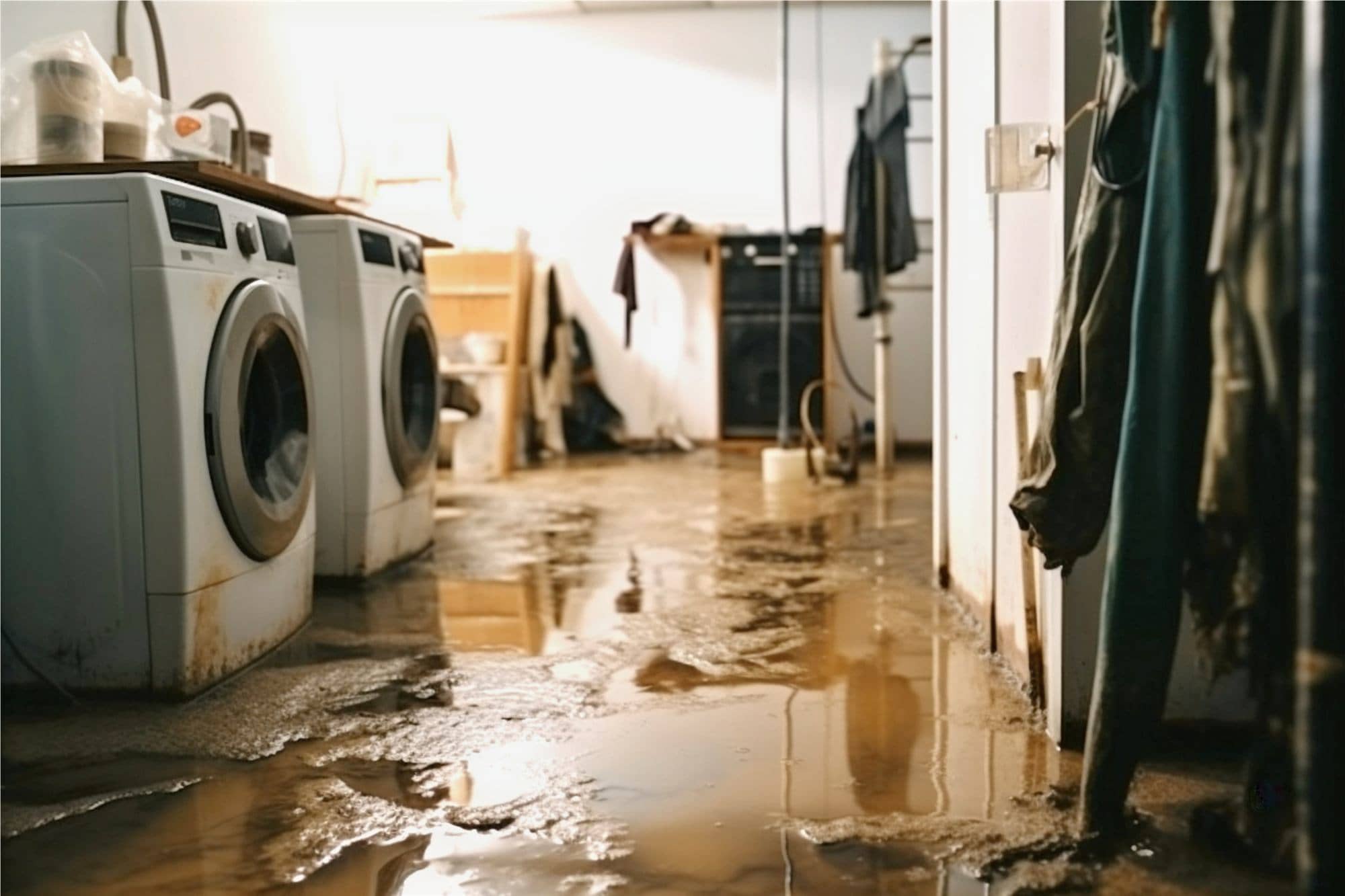
Water damage is unforgiving about time. Mold spores can begin germinating within 24 hours on wet drywall, and visible colonies often appear within three to seven days — a timeline that feels abstract until you are staring at a soaked living room at 10 p.m. on a Tuesday. In Central Texas, the threat is compounded by a climate that swings between drought-level dryness and sudden, intense rain events, by the clay-heavy soils under most Buda and Austin-area homes, and by aging pipe infrastructure that took a beating during Winter Storm Uri in February 2021. This guide covers what to do immediately, what your insurance likely covers, when you can reasonably handle things yourself, and when you need licensed help.
Why the Austin Area Has a Particular Problem
Most of the Buda and South Austin corridor sits on Blackland Prairie clay — Taylor Black Clay specifically — which absorbs water and expands, sometimes increasing in volume by more than 25 percent during a wet period. When that clay is dry, it pulls away from your foundation. When it saturates, it pushes against it. A large share of Central Texas homes experience measurable foundation movement tied to this clay cycle. That movement creates gaps, cracks, and shifting at slab penetrations — exactly the places water finds its way in.
Then there is the freeze problem. Winter Storm Uri set a record in Austin: temperatures stayed below freezing for more than 110 consecutive hours in February 2021. Pipe supply lines, particularly those running through uninsulated exterior walls or attics, froze and split across the metro. Statewide, 31 percent of Texas residents reported water damage to their homes from that single storm. The Austin metro water system itself saw such dramatic increases in consumption from dripping faucets and burst mains that the city issued water conservation orders. Many of those same homes — and the same building practices that left pipes vulnerable — are still in place today.
The third factor is rainfall pattern. The Austin area averages around 34 to 36 inches of rain per year, but it rarely arrives politely. It tends to come in short, intense bursts — the kind that overwhelm gutters, storm drains, and soil absorption rates simultaneously. Clay does not shed water the way sandy Hill Country soil does; it pools it and redirects it toward the lowest point, which is often a door threshold, a slab seam, or a window well.
The First 24 Hours: What You Do Matters
Cut power to any room where water is standing or soaking into the floor before you enter it. Water and live circuits are not a judgment call — if you cannot reach the breaker without walking through the affected area, call your utility provider to disconnect service at the meter. Only once the space is confirmed safe should you move to the source.
Stop the water. For a burst supply line or running fixture, the shutoff is usually at the fixture itself or at the main shutoff near the meter. Know where your main shutoff is before you need it — most homeowners discover they do not during a crisis. For a roof leak during a storm, you cannot stop the rain, but you can limit interior damage by laying plastic sheeting under the breach and using buckets to capture active drips.
Remove standing water as quickly as possible. Wet-dry vacuums handle small volumes well. Towels and mops are useful for thin films on hard flooring. For more than a few gallons spread across a room, or for any water that has soaked carpet padding, you need a pump — either rented or brought in by a restoration company. The longer water sits, the deeper it wicks into subfloor, wall framing, and insulation.
Start drying immediately. Fans accelerate evaporation from surfaces, but they are not enough on their own. Dehumidifiers are the real workhorses — they pull moisture out of the air, which is where the water goes once you have moved it off the floor. Residential dehumidifiers from a hardware store are better than nothing, but professional-grade units remove dramatically more moisture per hour. In a Texas summer, where outdoor humidity is already high, this difference matters. Keep windows closed unless outdoor humidity is lower than indoor humidity — in August in Buda, that is rarely the case.
Document everything before you touch it. Photograph and video the damage from multiple angles. Pull back carpet to show the pad and subfloor. Open a cabinet under the sink if that is where the leak started. Your insurance adjuster will ask for this evidence, and the more thorough you are, the cleaner your claim will be.
What Your Homeowner's Policy Actually Covers
Texas homeowner's policies cover sudden and accidental water damage from sources inside the home — a burst supply line, an overflowing toilet, a washing machine hose that fails. The Texas Department of Insurance confirms this applies to standard HO-3 and HO-A policies. What policies consistently exclude is gradual damage: a slow drip under a sink that has been staining the cabinet floor for a year, a pinhole leak in a copper line that has slowly rotted out the wall behind it. Insurers treat those as a maintenance failure, not a covered event.
Flooding — defined as water entering from outside — requires a separate flood insurance policy, typically through the National Flood Insurance Program. Standard homeowner's insurance does not cover it, regardless of how severe the storm was. If your home sits in or near a FEMA-designated flood zone, or in a low-lying area that has flooded historically, a flood policy is worth pricing out.
Under the Texas Prompt Payment of Claims Act (Texas Insurance Code Chapter 542), your insurer must acknowledge your claim and begin investigating within 15 days of notice. After they have everything they need, they have 15 business days to accept or deny the claim, and 5 business days to issue payment once they accept it. If they miss those deadlines without proper notice to you, they owe 18 percent annual interest on the claim amount plus attorney's fees. Note the date you filed. Note every contact.
One thing you cannot do under Texas law: accept a contractor's offer to waive or absorb your deductible in exchange for using their services. Under Texas Business & Commerce Code Section 27.02, that is a Class B misdemeanor — and the contractor offering it faces up to 180 days in jail and a $2,000 fine. The deductible is yours to pay under Texas Insurance Code Section 707.002. Any contractor who makes that offer is not someone you want working on your home.
If you are wondering how long you have to bring a legal claim against a responsible party — a plumber whose work failed, a contractor whose poor waterproofing led to intrusion — the Texas Civil Practice and Remedies Code Section 16.003 gives you two years from the date of the damage.
When You Can Handle It Yourself
Small water events with fast response times are often manageable without a contractor. A toilet overflow caught immediately that wetted only a tile bathroom floor — tile you can mop, a vanity base you can dry with fans, no carpet involved — is something most homeowners can handle. A small washing machine supply line drip caught early, where the water has not wicked into drywall or subfloor, is similar.
Mold is the variable that changes the calculation. Under Texas Occupations Code Chapter 1958 and 16 TAC Chapter 78, anyone you hire to remediate mold on an area of 25 contiguous square feet or more must be licensed by the Texas Department of Licensing and Regulation. As a homeowner, you can clean up mold in your own home without a license — even above that threshold — but the moment you hire someone, that 25-square-foot line requires a licensed mold remediation contractor. A small, isolated patch of surface mold on caulk or grout — less than 25 square feet, visible, accessible — is something you can address with a diluted bleach solution and gloves. Mold inside wall cavities, in HVAC systems, or spreading across multiple rooms is not.
When to Call a Restoration Contractor
The honest answer is: when drying is incomplete, when you cannot see where the water went, or when the source was anything other than clean supply-line water.
Category matters. Clean water from a burst supply pipe is the best-case scenario. Gray water — from a washing machine drain, a dishwasher, or a toilet overflow involving only clean water from the tank — introduces bacteria and requires more thorough cleaning and disinfecting. Black water from a sewage backup or outdoor flooding is a biohazard that requires full protective equipment, specialized cleaning agents, and often removal of affected materials. Do not try to mop up sewage backup with household cleaning supplies.
Structural drying — getting moisture out of wall cavities, subfloor, and insulation — requires moisture meters and professional-grade drying equipment. Water travels along framing members and wicks through drywall paper in ways that are not visible on the surface. A wall that feels dry to the touch may have wet insulation and framing behind it. Left wet, that framing grows mold and softens. The only way to know what is dry is to measure it.
For insurance claims involving significant damage, a restoration contractor who documents the scope of work and drying progress — with timestamped moisture readings — gives your adjuster a cleaner path to approving the claim. The documentation the contractor creates is the same documentation that protects you if the claim is disputed.
Prevention in a Central Texas Context
Insulate any supply lines running through uninsulated exterior walls or attic spaces. February 2021 was not a once-in-a-generation event — the pattern of occasional hard freezes punctuating years of warm winters is likely to continue, and pipe insulation is inexpensive relative to a water damage claim.
Grade soil away from your foundation. The clay around Central Texas foundations should slope away from the slab at roughly one inch per foot for the first six feet. Flat or reversed grades pool water against the foundation during heavy rain — the kind of ten-minute downpour Austin gets in May and October — and increase hydrostatic pressure against slab edges and any wall penetrations.
Clean gutters twice a year at minimum — after the spring oak pollen drop and after fall leaf-off. Clogged gutters overflow along the fascia and run water down the exterior wall directly to the foundation. Pair clean gutters with downspout extensions that discharge at least four feet from the foundation.
Know your shutoffs. Main water shutoff, individual fixture shutoffs, and — if you have a tankless or tank water heater — the gas supply shutoff. A burst pipe at 2 a.m. is much less damaging if you can stop the water in 30 seconds instead of 10 minutes.
Water alarm sensors placed under sinks, near the water heater, and beside the washing machine cost less than $15 each and can alert you to a slow leak before it becomes a saturated subfloor. They are not sophisticated, but they are reliable.
If your home is older and still has polybutylene pipe — gray flexible plastic commonly installed in Central Texas homes built between the mid-1970s and mid-1990s — consider having a plumber assess it. That material is known to fail at fittings and has been the subject of major class-action settlements. It is not something to panic about today, but it is worth knowing if you have it.
Getting It Right the First Time
Water damage handled poorly the first time becomes mold damage, then structural damage, then a much larger insurance claim or an out-of-pocket expense that dwarfs what proper drying would have cost. The decision about whether to call a contractor is not about money spent now — it is about whether the structure is actually dry and the loss is fully documented.
CDG Restoration & Construction serves Buda, Kyle, Austin, and the surrounding Hill Country communities from our base in Buda. If you have experienced water damage and are unsure whether your drying effort is sufficient, or if you are dealing with a loss that involves gray water, black water, or significant structural materials, call us at (737) 309-5075. We can assess what you are working with and tell you honestly what needs professional attention and what does not.
Related Reading
Effective Strategies for Water Damage Restoration
Austin's geology makes water damage here different from anywhere else. Here is what actually happens to your home after a flood, and what to do about it in the first 48 hours.
Read moreThe Importance of Using a Skilled Water Restoration Company When Water Is Noticed in Your Home
When water shows up in your home, the clock is already running. Here is what a professional restoration company does that a shop vac and a few fans cannot, and why Central Texas conditions make the stakes higher.
Read moreHow to Choose a Restoration Contractor in Austin, TX
Water damage, fire, mold — when your Austin home is in crisis, the contractor you hire in the first few hours shapes everything that follows. Here is what to look for and what to avoid.
Read moreDealing With This Right Now?
Call and describe what you are looking at. We will tell you honestly what it is, whether it is worth an insurance claim, and what it takes to put right. Inspections and estimates are free.
Call Now